Shutting down an industrial facility is far more complex than flipping a switch and locking the doors. Whether closing a chemical manufacturing unit, an oil refinery, or an automotive assembly line, retiring industrial assets requires a structured, multi-disciplinary framework.
This educational guide explores the entire plant decommissioning lifecycle. We will break down the strategic planning framework, safety and risk assessment protocols, regulatory compliance mechanisms, equipment handling procedures, and environmental site restoration.
1. Understanding Plant Decommissioning and the Decommissioning Framework
To understand how an industrial facility reaches the end of its operational lifecycle, we must first define what plant decommissioning actually entails and how it differs from a routine factory shutdown.
Defining Plant Decommissioning vs. Factory Shutdown
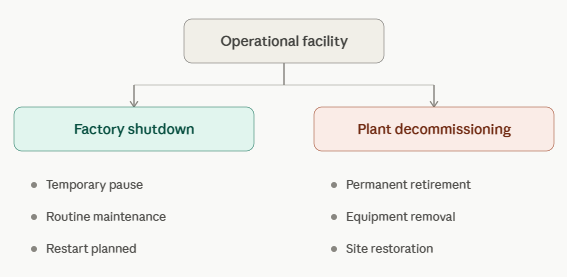
In industrial engineering and operations management, terms like plant shutdown and factory shutdown are often used interchangeably, but they represent very different operational states:
- Temporary Factory Shutdown: A planned pause in operations for routine maintenance, minor repairs, or temporary demand drops. The goal is always to resume production.
- Plant Decommissioning: The formal, permanent process of taking a facility out of service. It involves safe de-energization, removal of hazardous materials, equipment dismantling, environmental remediation, and final site restoration.
Why Do Industrial Facilities Undergo Decommissioning?
Industrial assets are retired for several strategic, technical, and economic reasons:
- End of Design Life: Aging structures and machinery suffer from structural fatigue, increasing maintenance costs, and elevated safety risks.
- Economic Viability: Technological shifts or market changes can make operating older production lines financially unfeasible.
- Regulatory and Environmental Compliance: Stricter environmental standards may make upgrading an old facility more expensive than building a new one.
- Corporate Sustainability: Modern companies prioritize sustainable development, seeking to recycle high-value assets, lower carbon footprints, and remediate legacy contamination.
2. Decommissioning Options and Strategic Evaluation
Before starting physical work, engineering teams conduct a thorough evaluation of decommissioning options. Selecting the right path depends on facility age, structural integrity, regulatory requirements, and future land use goals.
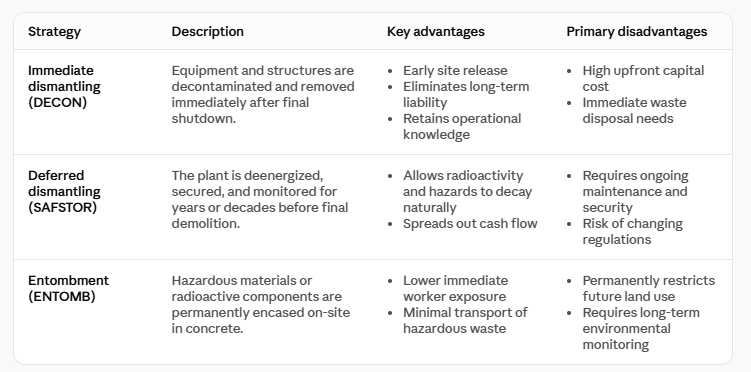
Engineers evaluate these options using a comprehensive risk assessment to balance safety, environmental impact, operational feasibility, and financial obligations.
3. Different Phases of the Decommissioning Process
A successful decommissioning project moves through distinct, well-defined phases. Skimping on early preparation often leads to cost overruns, safety incidents, and severe regulatory penalties.
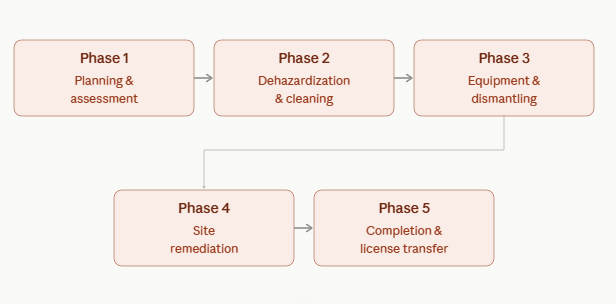
Phase 1: Pre-Decommissioning, Scope Definition, and Detailed Planning
During Phase 1, leadership defines the exact project scope, establishes management teams, and gathers all historical plant data while developing detailed plans and, where relevant, assessing site radioactivity levels before field work begins.
- Reviewing historical blueprints, engineering schematics, and spill records, along with on-site surveys to assess asset condition, performance, and compliance.
- Engaging relevant stakeholders, including local authorities, environmental agencies, community representatives, and plant staff.
- Developing the master decommissioning plan, safety management protocols, and regulatory compliance strategies.
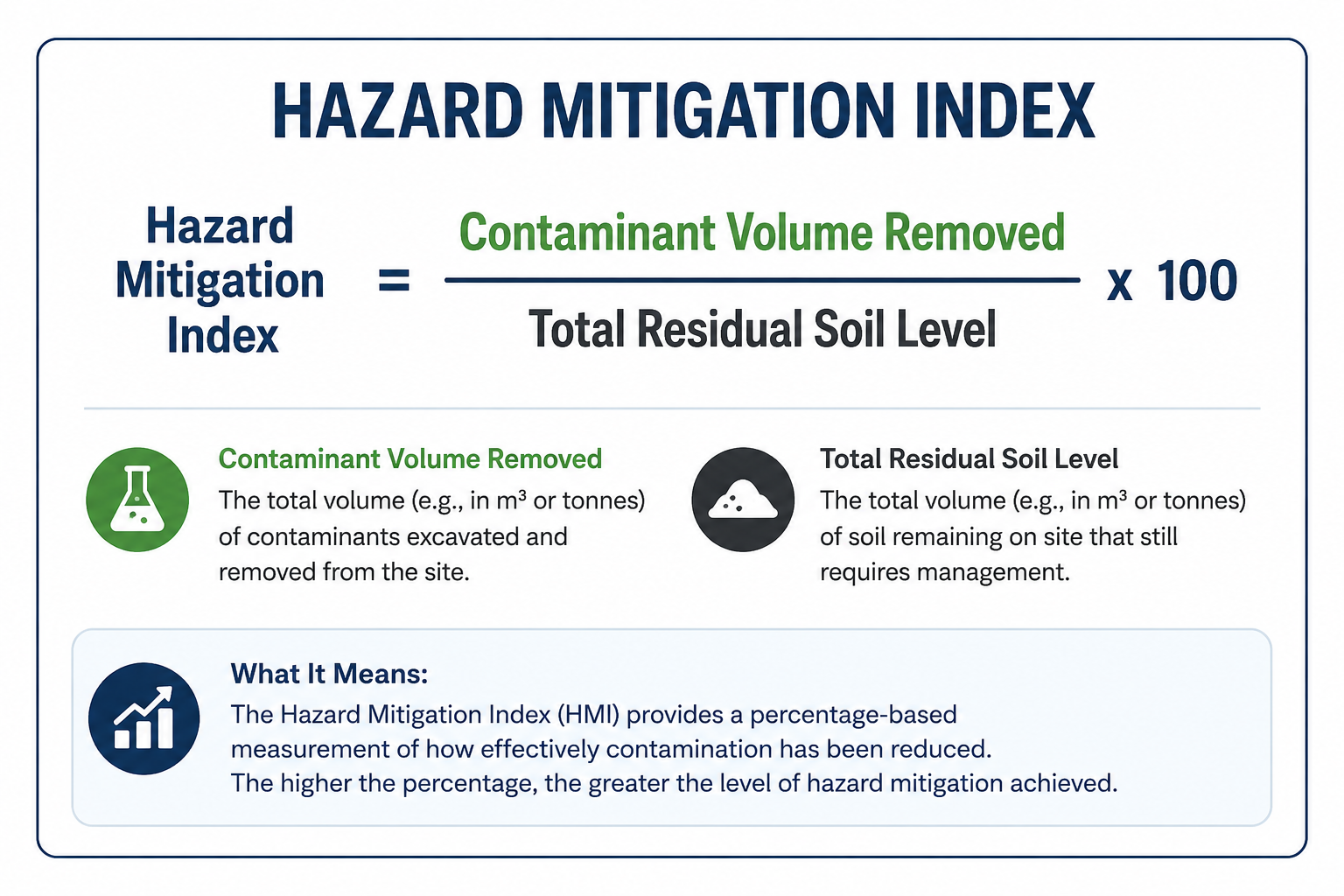
Phase 2: Hazard Mitigation, Decontamination, and Waste Isolation
Before physical dismantling begins, the plant must be made safe for demolition workers and specialized contractors. This is an essential step before demolition and contractor access.
- Draining, flushing, and cleaning tanks, piping, and reaction vessels.
- Executing decontamination activities to isolate chemical residues and volatile organic compounds (VOCs).
- Removing asbestos, lead paint, heavy metals, and other hazardous materials after teams identify potential hazards such as asbestos and other hazardous materials before removal begins.
Phase 3: Equipment Decommissioning, Structural Dismantling, and Demolition
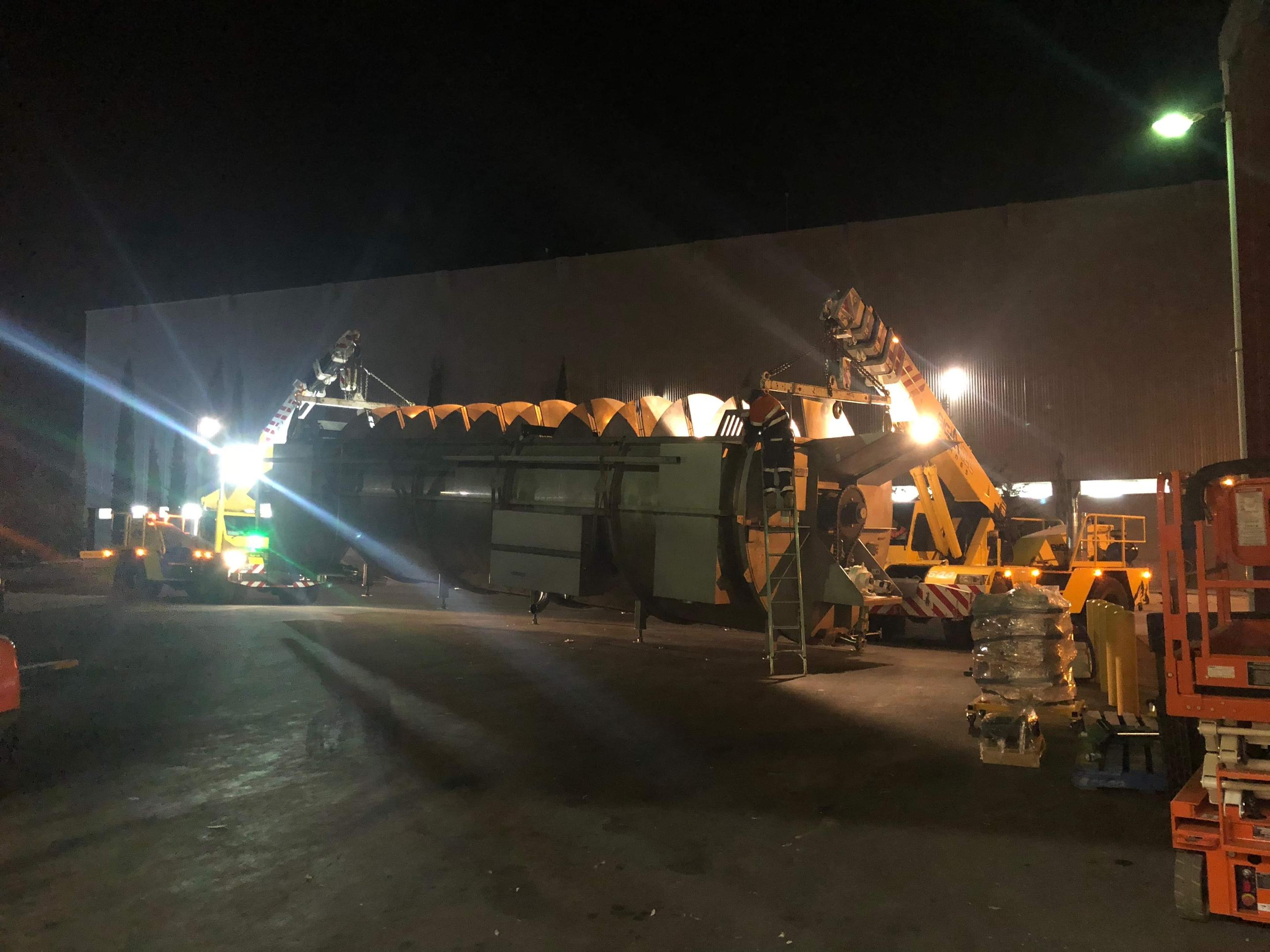
Once the facility is free of acute environmental hazards, mechanical and civil engineers move in to systematically dismantle equipment. All decommissioning work must comply with site safety procedures and applicable legal requirements during dismantling.
- Safely isolating all primary and backup energy sources using lockout/tagout (LOTO) procedures.
- Executing targeted equipment decommissioning across heavy machinery, mechanical systems, and electrical distribution networks, while securing interconnected other components that could be affected during removal.
- Performing structural demolition and safe dismantling of buildings, pipe bridges, and support frameworks.
Phase 4: Site Remediation and Site Restoration
After structures are cleared, focus shifts to ground-level and subsurface environmental work.
- Excavating contaminated soil and remediating groundwater reserves.
- Executing comprehensive site restoration to prepare the property for industrial reuse, commercial development, or greenfield status, while retiring and remediating obsolete facilities can also improve local air quality and reduce greenhouse gas emissions.
Phase 5: Project Completion, Final Audits, and Operating Licence Surrender
The final phase closes out regulatory and financial requirements.
- Conducting final environmental, safety, and structural post-audits.
- Submitting verified verification reports to regulatory bodies to formally surrender the site’s operating licence.
- Handing the property over to land developers, local authorities, or corporate asset managers.
4. Risk Assessment and Safety Management Protocols
Occupational safety is the cornerstone of every decommissioning project. Because facilities undergo structural changes during demolition, safety hazards change daily.
Safety Rule: Treat every pipe, wire, and vessel as live, pressurized, or contaminated until air monitoring, mechanical testing, and isolation checks prove otherwise.
Identifying Potential Safety Hazards
Engineers identify potential hazards through systematic evaluations before mapping operational risks:
- Chemical Hazards: Corrosive substances, toxic vapours, heavy metals, industrial solvents, and legacy asbestos insulation.
- Physical Hazards: Falling debris, structural instability during selective dismantling, open pits, confined spaces, and high-noise environments.
- Electrical Hazards: Trapped electrical energy, backup generators, and unmapped underground power conduits.
- Environmental Risks: Uncontrolled runoff into local waterways, airborne dust emission, and soil contamination.
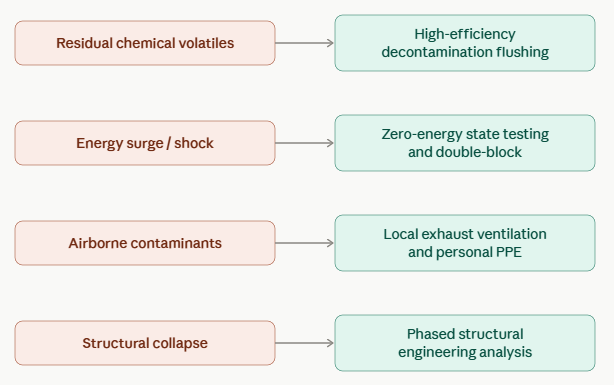
To manage these risks, project managers use an integrated safety matrix:
5. Equipment Decommissioning and Asset Recovery Strategies
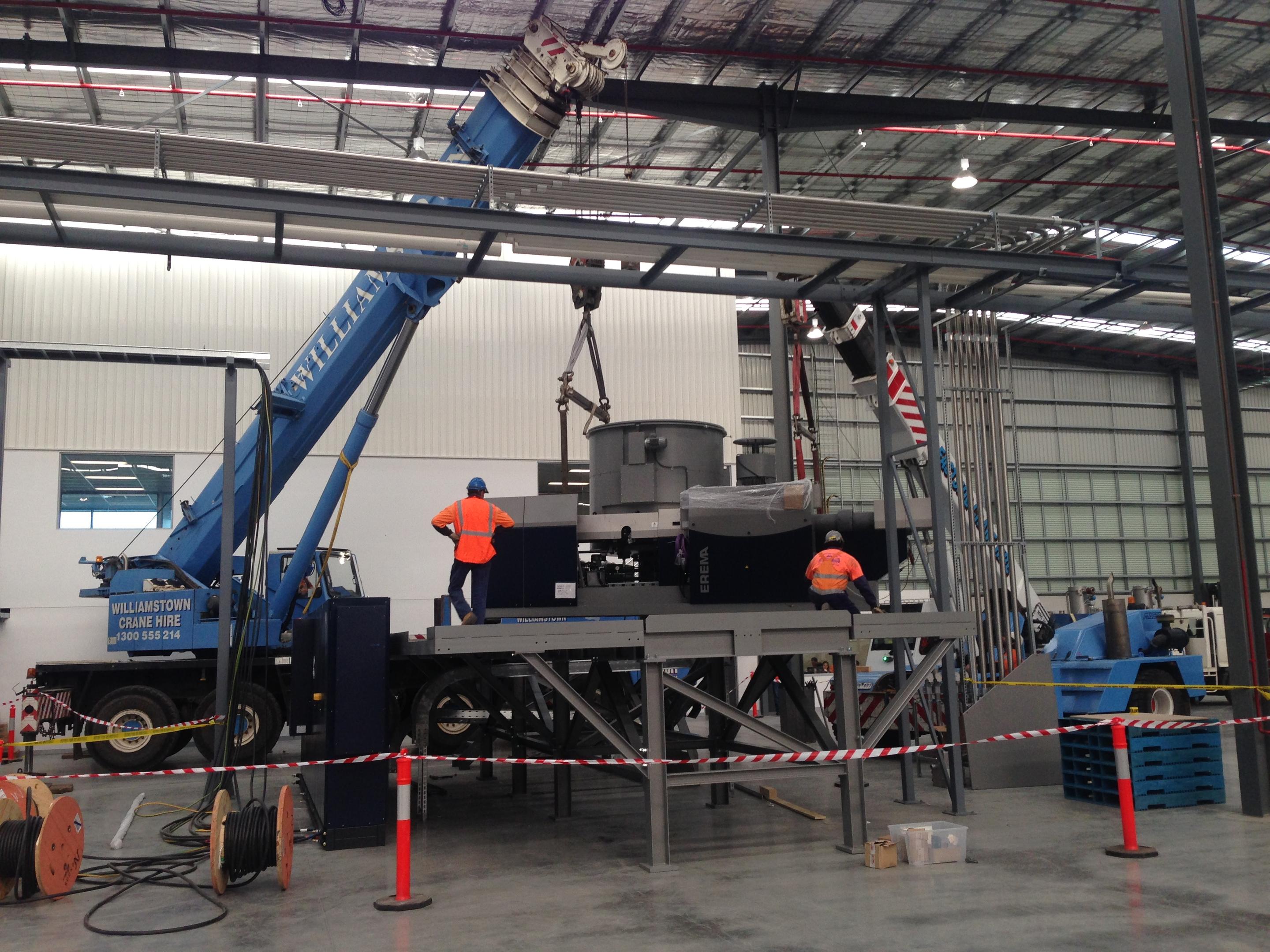
The systematic process of equipment decommissioning balances asset value recovery against execution speed and safety requirements.
Isolating Energy Sources and Production Lines
Before unbolting machinery or cutting pipe runs, workers must achieve a verified zero-energy state. This also means checking linked other components that may still store energy or transfer loads into the work area:
- Lockout/Tagout (LOTO): Physical locks and tags installed across all electrical switches, pneumatic valves, and hydraulic lines.
- Physical Breaks: Installing line blinds or removing pipe sections to ensure zero fluid migration into work zones.
- Depressurization and Thermal Venting: Safely relieving trapped pressure and bringing heat-exchanger units down to ambient temperature.
Asset Recovery: Re-use, Resale, and Recycling
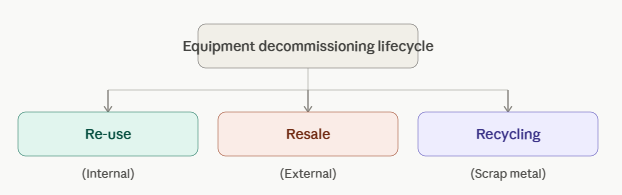
Industrial equipment often retains significant monetary value. Strategic planning maximizes asset recovery through three primary channels; for example, a decommissioned pump or switchgear package may be redirected instead of scrapped:
- Internal Re-use: Transferring operational pumps, electrical switchgear, or specialized units for internal reuse at other operational industrial facilities within the corporate network.
- External Resale: Selling functional machinery, process units, or laboratory gear to secondary market buyers or specialized brokers.
- Material Recycling: Sorting structural steel, copper wiring, brass fittings, and exotic alloys for metal scrap recycling, with some recovered materials processed for reuse where standards allow.
6. Environmental Management, Decontamination, and Site Restoration
Protecting the surrounding ecosystem requires robust environmental management from initial shutdown through final land release.
Identifying Potential Hazards in Utilities and Process Systems
Legacy infrastructure often conceals hidden environmental liabilities. Key systems requiring careful testing include:
- Cooling Towers: Cooling tower systems require biocide treatment and sludge removal to eliminate biohazards like Legionella bacteria.
- Underground Storage Tanks (USTs): Hydrocarbon accumulation in soil often traces back to undetected tank leaks or underground piping failures.
- Transformer Yards: Older electrical transformers and capacitors may contain regulated Polychlorinated Biphenyls (PCBs).
Decontamination Activities and Hazardous Material Removal
Effective decontamination activities follow strict technical protocols:
- Solvent Flushing: Circulating neutralizers or solvent wash solutions through pipe runs to dissolve sticky residues.
- Abrasive Blasting and Hydro-blasting: Removing surface contamination, rust, and lead paint coatings from structural steel.
- Hazardous Materials Containment: Establishing negative-pressure containment zones during asbestos abatement and volatile organic compound removal.
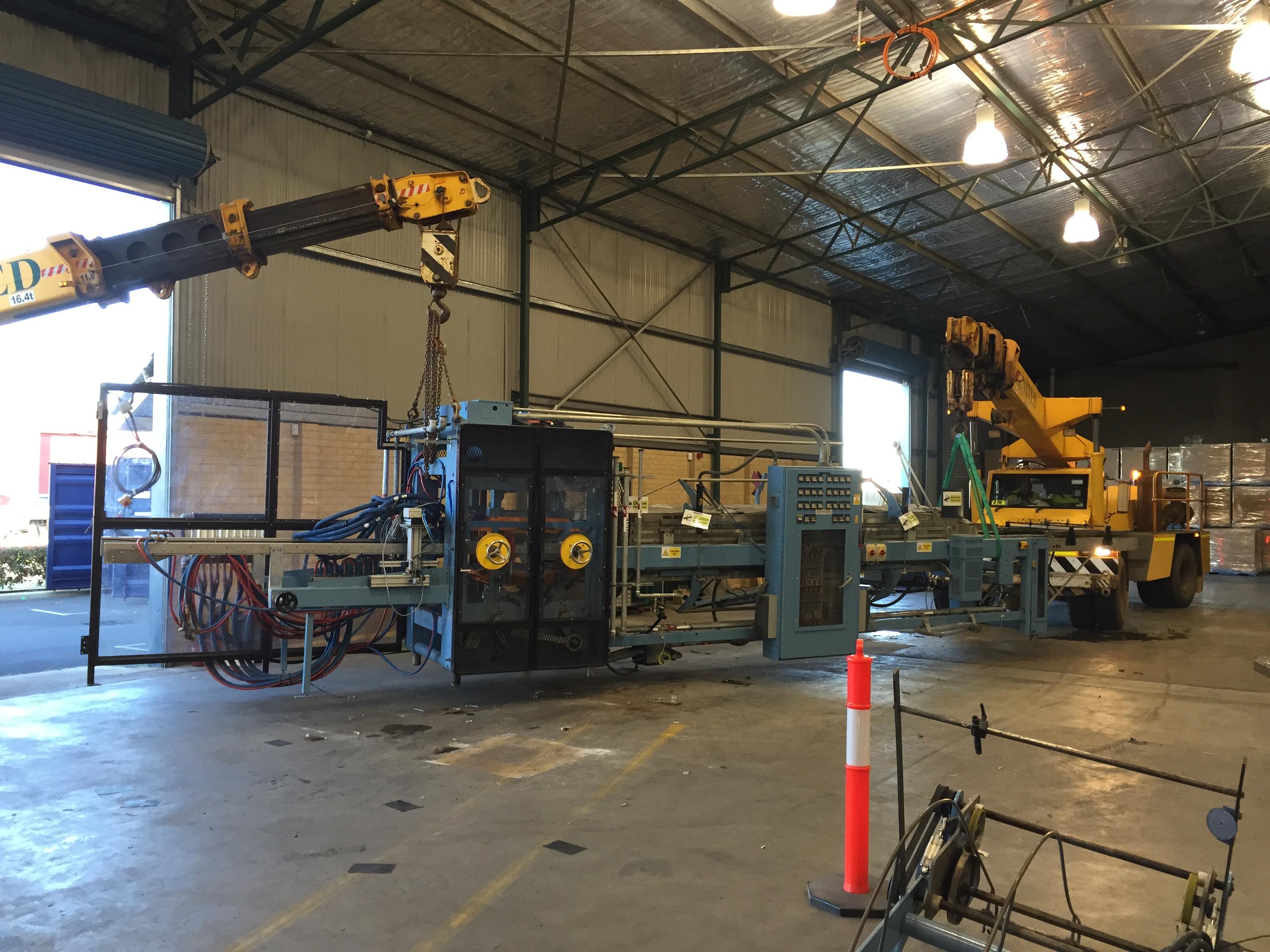
7. Industry Case Studies: Oil and Gas Industry vs. Power Generation
Decommissioning requirements vary significantly by sector. Comparative analysis shows distinct challenges across different industries. Demand is also expanding, with the industrial decommissioning market projected to reach $21.5 billion by 2030. For industrial plants, that often means safely retiring or removing entire manufacturing facilities while meeting compliance, environmental, and future site reuse requirements.
The Oil and Gas Industry
In the offshore and onshore oil and gas industry, projects feature high-pressure systems, subsea pipelines, offshore jackets, and heavy hydrocarbon contamination.
- Key Challenge: Safely removing subsea jackets, capping deepwater wells, and flushing long, complex hydrocarbon pipelines without marine discharge.
- Regulatory Focus: Strict environmental rules governing marine ecosystem protection and zero-discharge protocols.
Power Generation Plants
Decommissioning coal-fired, gas-fired, or nuclear power facilities presents different scale and engineering challenges. More than 220 commercial reactors have been decommissioned globally.
- Key Challenge: Demolishing massive cooling towers, clearing heavy turbine halls, managing fly ash ponds, and handling radioactive waste (in nuclear settings). Defueling removes spent fuel from the reactor into long-term storage.
- Regulatory Focus: Complex permit surrenders covering air quality, water discharge, and radiological health standards. In the US, the NRC expects decommissioning activities to be completed within 60 years, while Germany’s projects often take around 15 years. US reactor decommissioning typically costs $544 to $821 million, and gas-cooled reactors can cost about five times more than light water reactors.
8. Managing Costs, Stakeholders, and Best Practices
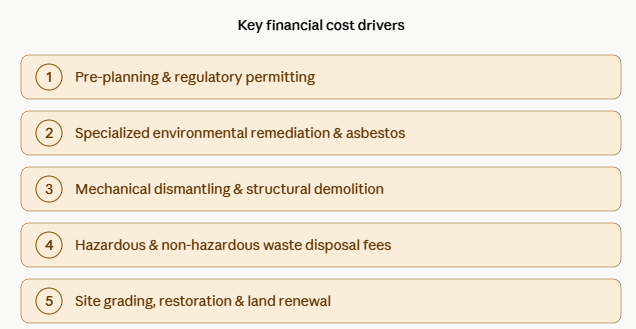
Strategic cost management and open communication keep projects on schedule, within budget, and fully compliant, while decommissioning contributes to environmental protection, regulatory compliance, and long-term redevelopment outcomes. Decommissioning can also create significant socio-economic shifts for local communities, which is why stakeholder planning matters.
Best Practice Frameworks for Project Success
Successful decommissioning execution relies on key management pillars:
- Thorough Early Characterization: Spend time and budget upfront to survey structures, test soil, and map utilities, and assess structures, utilities, and contamination before work starts. Eliminating unknowns reduces cost overruns later.
- Transparent Stakeholder Communication: Maintain clear communication with local communities, regulatory authorities, emergency responders, and former workers.
- Rigorous Contractor Oversight: Ensure all demolition and abatement contractors comply with health, safety, and environmental standards, with lessons learned carried forward into planning for the next factory shutdown.
- Integrated Waste Tracking: Use detailed manifest tracking for every load of hazardous waste, scrap metal, or recyclable concrete leaving the property, for example outbound asbestos containers or metal skips.
As industrial facilities continue to evolve and adapt to modern sustainability goals, robust detailed planning, systematic risk assessment, and strict safety management will remain the bedrock of successful decommissioning projects worldwide.
How Jarlam Can Help Your Next Factory Decommissioning Process.
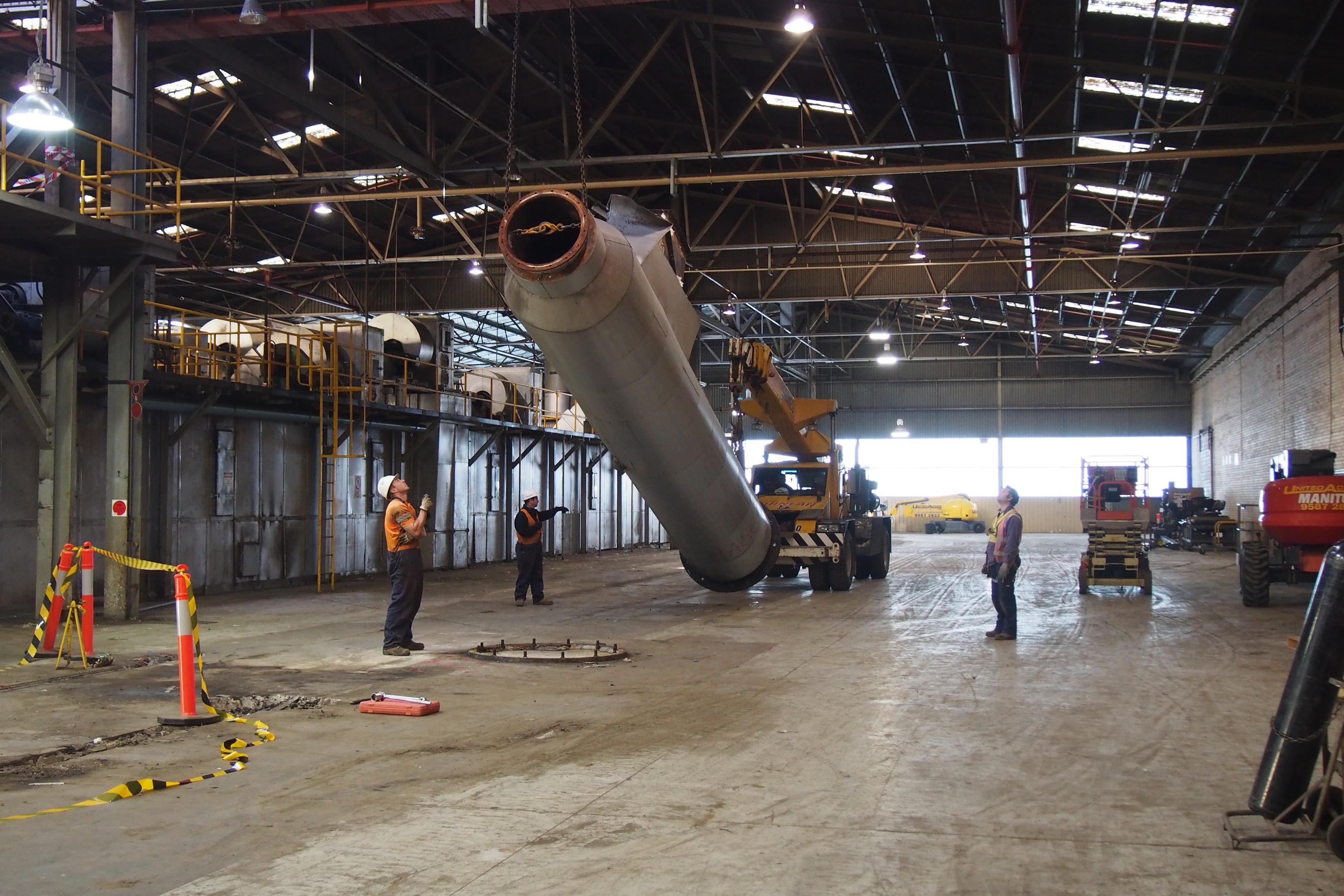
Partnering with Jarlam Australia for your next plant decommissioning project delivers a seamless, end-to-end turnkey solution that minimizes operational downtime, ensures regulatory compliance, and protects your bottom line.
Key benefits Jarlam brings to your decommissioning project include:
- End-to-End Project Management: Jarlam oversees every phase—from initial on-site asset surveys and hazard assessments to mechanical/electrical disconnection, safe dismantling, transport, and site “make good”. Your team can focus on core operations while single-source experts handle the heavy lifting.
- Safety & Compliance First: With specialized trades, up-to-date licenses, and strict adherence to SWMS, JSAs, and environmental standards, Jarlam safely mitigates risks associated with hazardous materials, heavy rigging, and high-risk environments.
- Asset Recovery & Relocation Expertise: Whether equipment is being permanently retired, recycled, or relocated to another facility, Jarlam’s in-house engineering, rigging, and logistics capabilities ensure assets are handled with precision.
- Industry Experience & Timeline Guarantee: Backed by extensive experience across sensitive sectors like food, beverage, and pharmaceuticals, Jarlam works within tight schedules to deliver projects on time and within budget.
By trusting Jarlam with your plant decommissioning, you gain a reliable partner dedicated to safe, cost-effective, and hassle-free asset retirement.