Setting up a modern production line can be a complex puzzle. In the industrial landscape, transitioning from a conceptual floor plan to a fully functional, high-output manufacturing facility requires more than just heavy machinery and floor space. It demands deep engineering expertise and an exact blueprint for action.
At the heart of every successful production line installation is extensive engineering design. The process transforms abstract ideas into high-performing physical systems. By examining the behind-the-scenes work of specialized engineering teams, this blog explores how strategic planning, advanced software tools, and meticulous drafting services shape the future of manufacturing.
CAD Design Companies: The Foundation of Industrial Layouts
When a manufacturing company decides to install or upgrade a production line, they rarely start in-house. Instead, they look to specialised cad design companies to map out the physical realities of the project. These firms act as the bridge between conceptual engineering and actual fabrication.
Production Line Workflow:
- Conceptual Idea –> CAD Design Companies –> 3D Digital Model –> Physical Production Line.
Choosing to partner with an experienced engineering design firm provides access to the specialized talent required for complex layouts. Cad design companies do more than just draw lines on a screen; they evaluate workflow dynamics, spatial constraints, and material handling logistics.
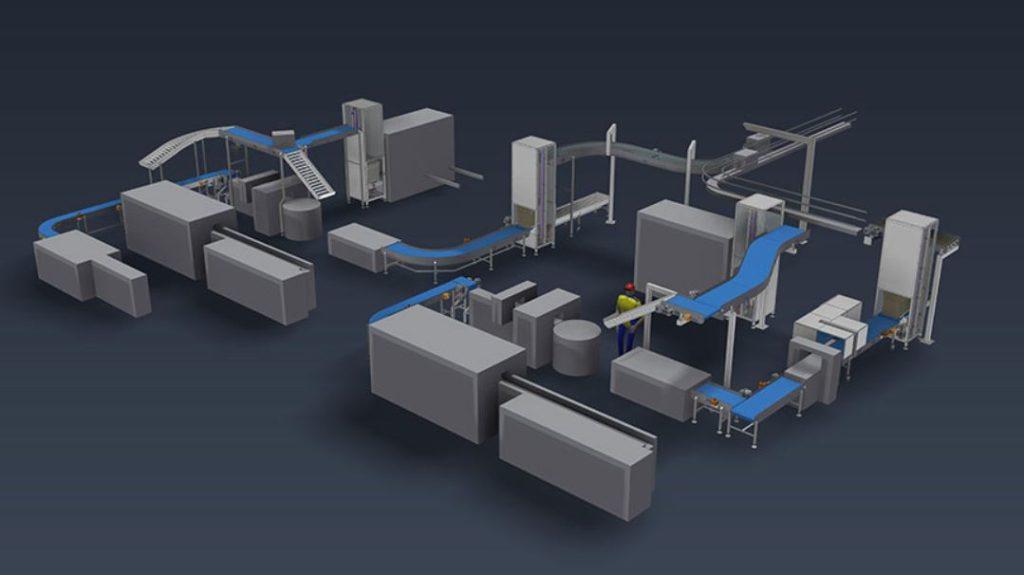
By utilizing advanced computer aided design software, these companies construct comprehensive 3D environments that replicate the proposed factory floor. This initial step ensures that every piece of machinery, conveyor system, and structural support fits perfectly, preventing costly spatial conflicts during physical installation.
Drafting Services: Transforming Concepts into Constructible Blueprints
If engineering design forms the brain of a production line project, then drafting services represent the hands that build its blueprint. No fabricator or construction crew can work directly from a 3D concept; they require precise, detailed, and highly technical documentation.
Drafting Services Deliverables:
- Technical Drawings: Covers exact component dimensions and spatial layout tolerances.
- Fabrication Details: Covers material specifications along with welding and assembly notes.
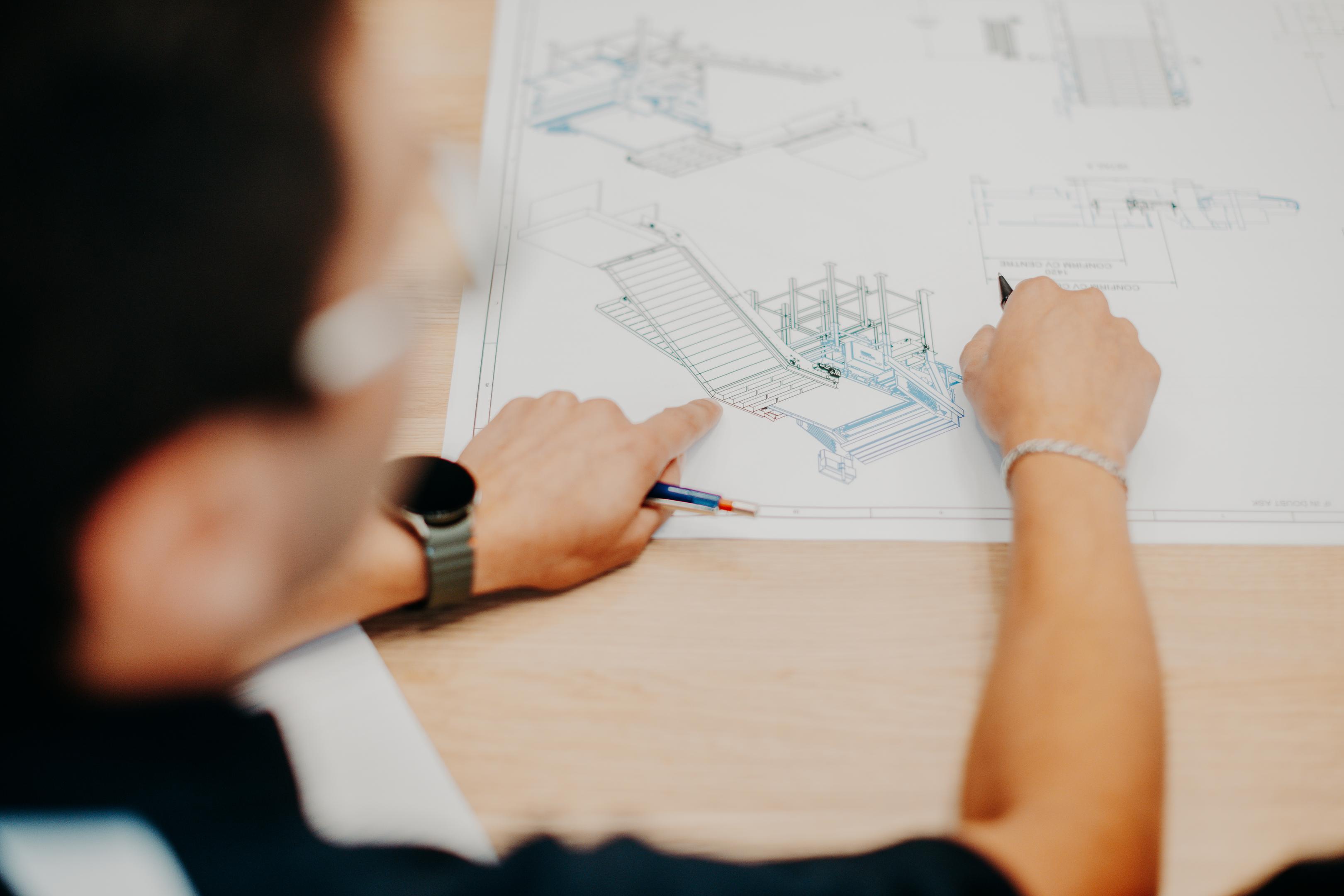
Professional drafting services convert complex 3D engineering models into clear, 2D detail drawings, and quality control processes are crucial for accurate CAD deliverables. These drawings contain exact dimensions, tolerance specifications, and material notes required for the physical assembly, and teams often work closely with fabrication partners to keep documentation practical for clients. As competition continues to grow across Australia’s manufacturing sector, relying on expert drafting reduces guesswork on the factory floor, ensuring the final installation matches the original design intent.
The Project Manager (PM): Harmonizing Design and Execution
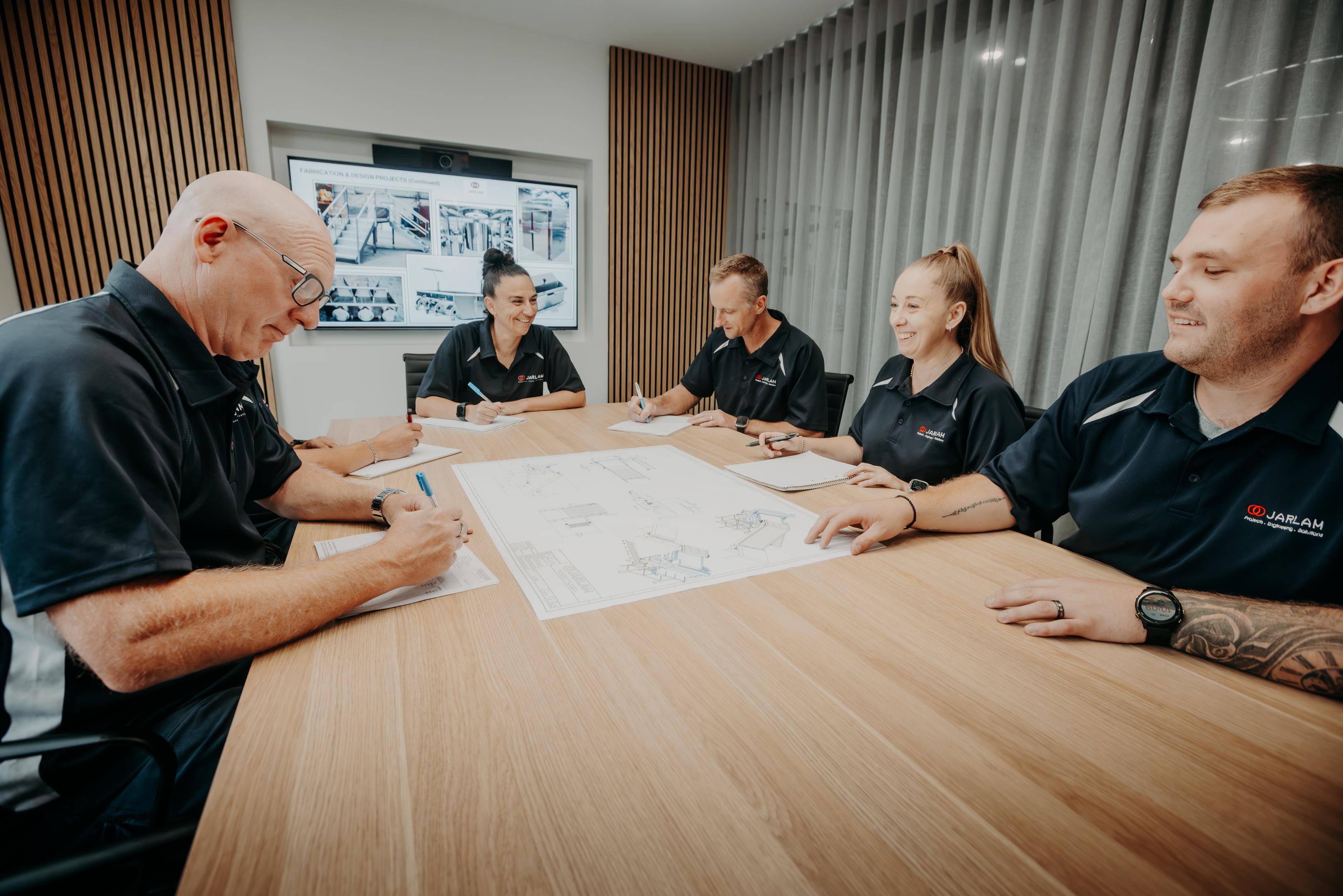
No engineering project is completed successfully without the right people, processes, and planning. A dedicated project manager serves as the central point of contact, balancing design aspirations with the realities of budgets, resources, and strict timelines.
Project Manager Coordination Tree:
- The Project Manager sits at the center, coordinating communication and schedules between three core arms: Engineering Design, Procurement & Budgets, and Fabricators & Builders.
The project manager ensures the engineering team, draftsmen, fabricators, and builders work closely toward the same objectives. By defining the project scope early, managing day-to-day coordination, and maintaining proactive communication, they keep multi-phase installations on schedule and within budget while keeping clients aligned with project progress and decisions.
Digital Engineering: Visualization, Simulation, and Clash Detection
The integration of digital engineering has transformed the deployment of modern production lines. Rather than relying on static 2D prints, engineering teams now construct dynamic digital twins of entire facilities.
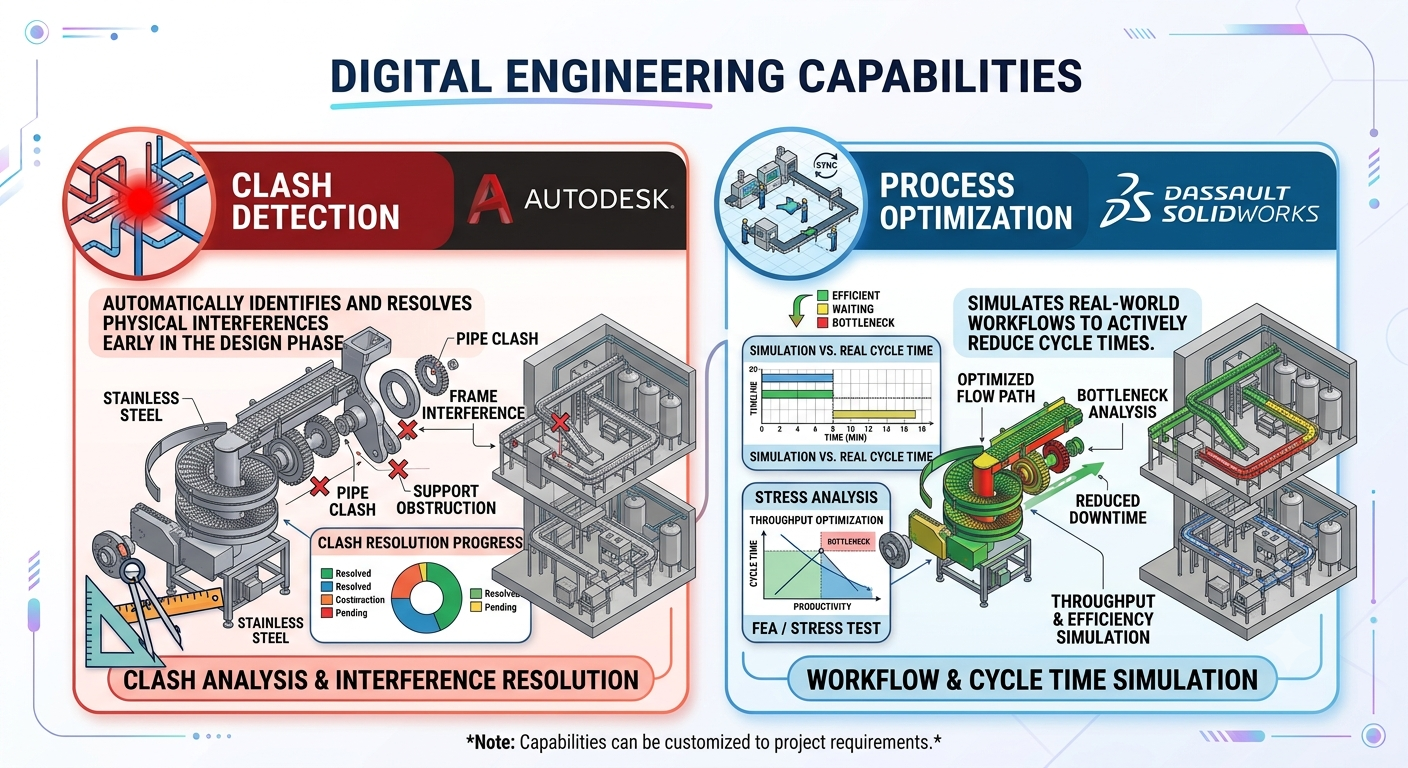
Through digital engineering, teams run advanced simulations to analyze product flows and identify mechanical bottlenecks before purchasing equipment. A key benefit of this approach is automated clash detection. For instance, if a structural column blocks a ventilation duct or a piping route overlaps with a conveyor motor, the software flags the conflict in the digital model, allowing for cost-effective corrections before construction begins.
Engineering Design: The Core of Structural and Operational Integrity
At its core, engineering design is about problem-solving. It ensures that a production line is efficient, structurally sound, safe, and built to last.
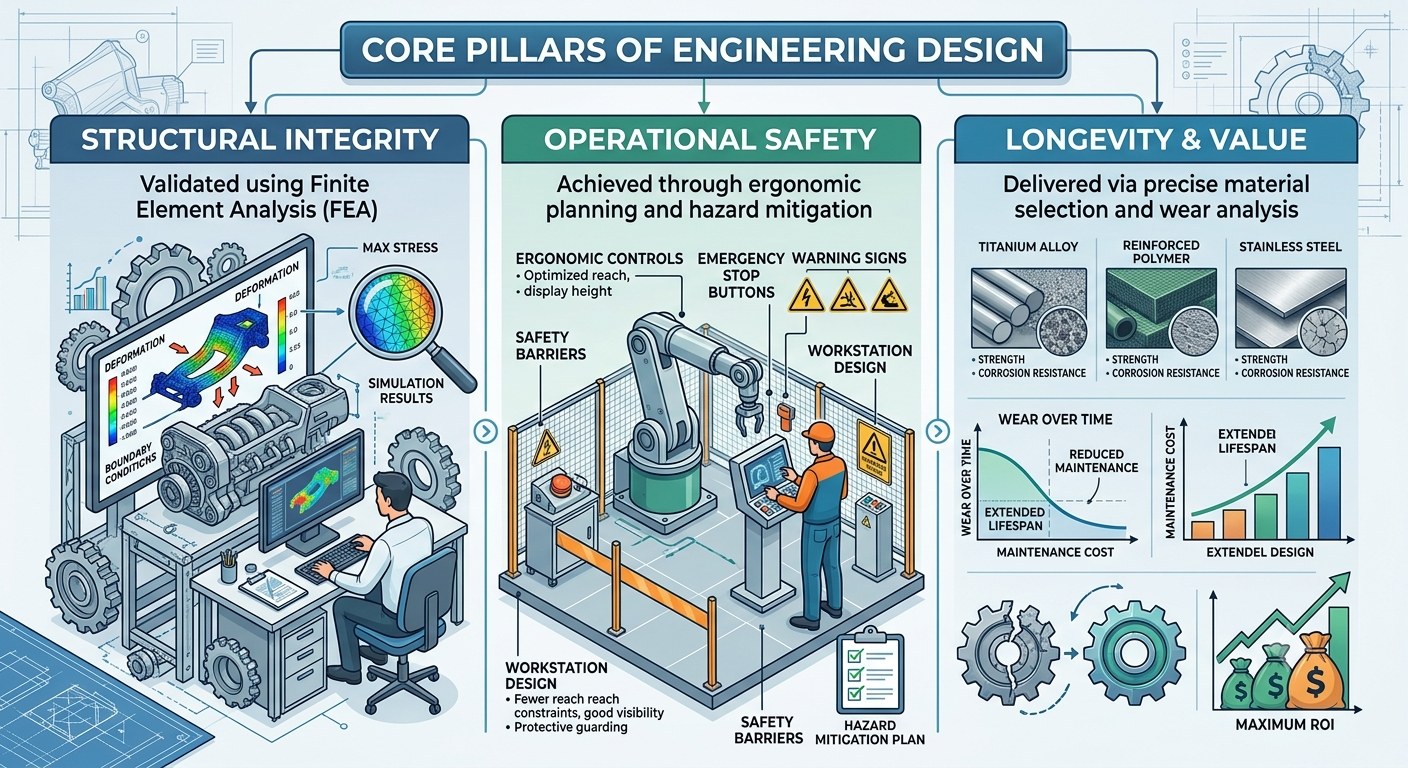
During the engineering design phase, mechanical engineers use Finite Element Analysis (FEA) to verify that structural platforms can support heavy vibrating machinery, and SolidWorks is also used for simulation and CAE in design. This development phase also addresses operational safety, maintenance access, and equipment serviceability to deliver reliable, long-term value throughout the asset’s operational life.
CAD Design: The Technical Engine of Modern Industry
Modern production environments depend heavily on cad design as their primary technical engine. Computer aided design software enables engineers to build components with high geometric precision.
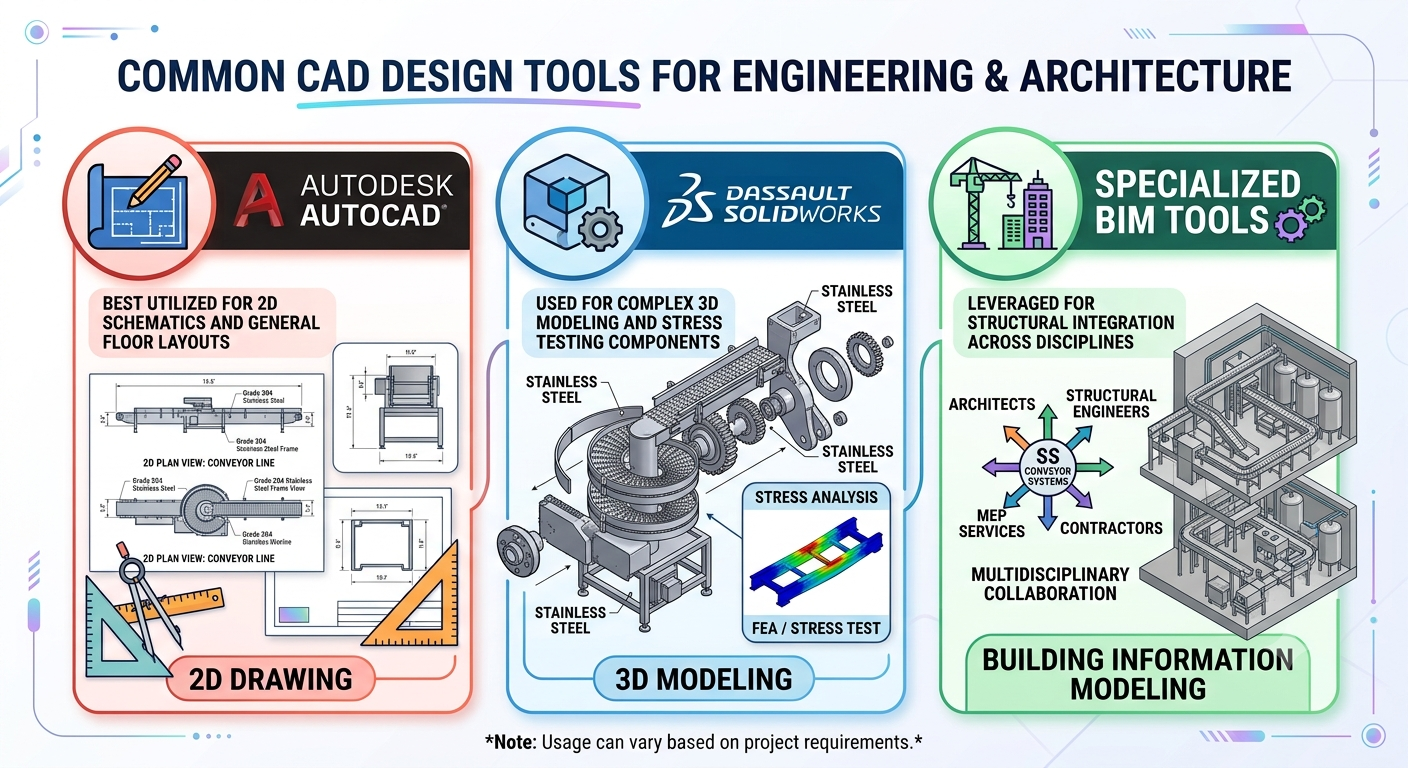
Whether using AutoCAD for schematic layouts, SolidWorks for complex mechanical assemblies, or Revit where appropriate, top CAD firms use this software stack to support product development workflows and deliver reliable technical outcomes. CAD software commonly includes AutoCAD, SolidWorks, and CATIA. It serves as the central repository for all technical data, managing dimensions, bill of materials (BOM) data, and manufacturing tolerances to keep engineering data aligned across teams. Fusion 360 is also a popular CAD tool for product design.
Piping Design: Managing Fluid Systems and Industrial Utilities
Many production lines require more than just mechanical movement; they depend on the precise delivery of fluids, gases, and pneumatic power. This is where specialized piping design becomes critical.
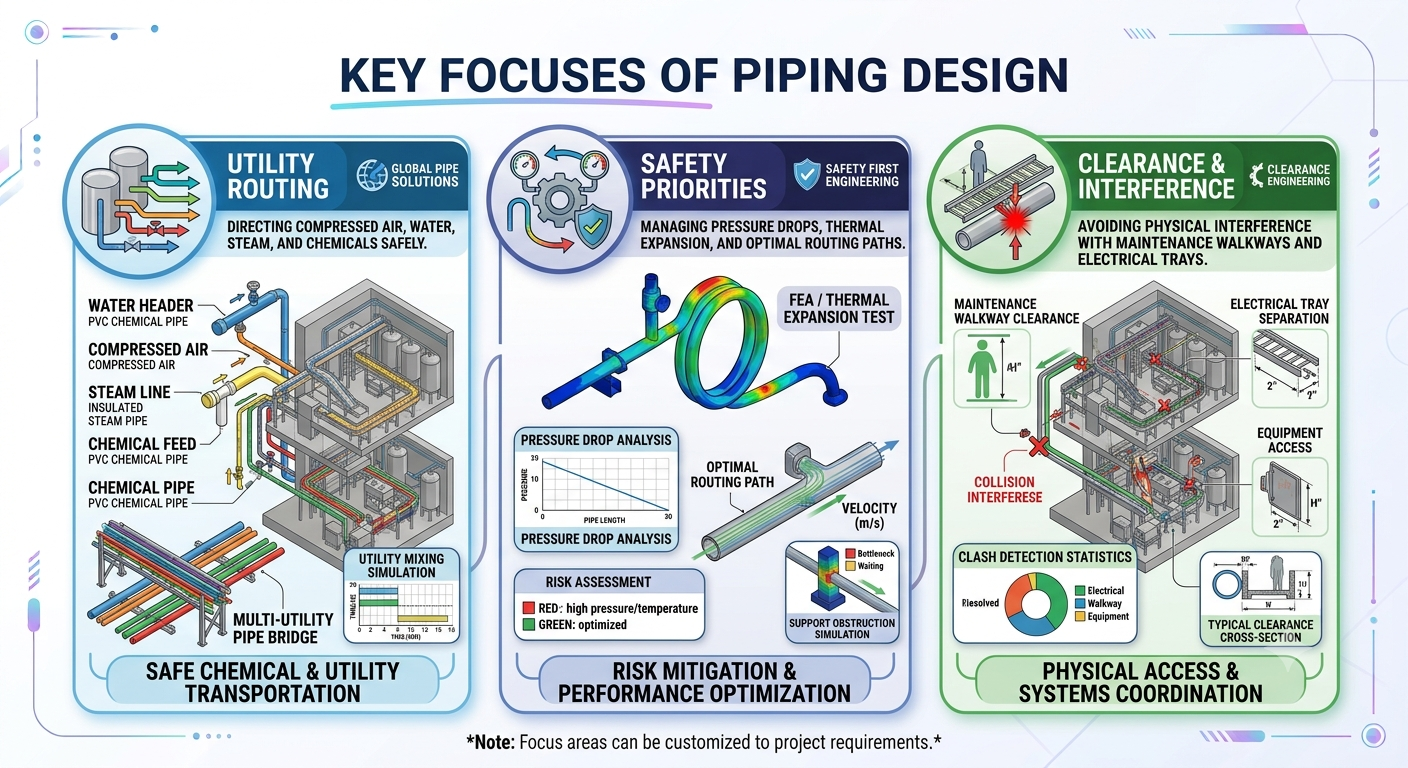
An accurate piping design ensures that compressed air, water, steam, or chemicals reach the correct parts of the assembly line at the proper pressure and flow rate. Engineers must account for thermal expansion, pressure drops, and proper support locations while avoiding maintenance walkways, electrical trays, and overhead cranes.
Australian Standards: Navigating Local Regulatory Compliance
In the Australian industry, compliance with local regulations is a strict legal requirement, not an optional step. Every manufacturing facility and production line must adhere to rigorous safety and operational benchmarks, including relevant building requirements where they apply.
Engineering teams must design systems to satisfy these specific compliance needs from day one, ensuring compliance with applicable regulations and industry standards. This involves aligning with standards such as:
- AS 4024 for the safeguarding of machinery.
- AS 1170 for structural design actions.
- AS 1100.201 for mechanical engineering drawing standards.
- AS 1210 / AS 4041 for pressure vessels and pressure piping.
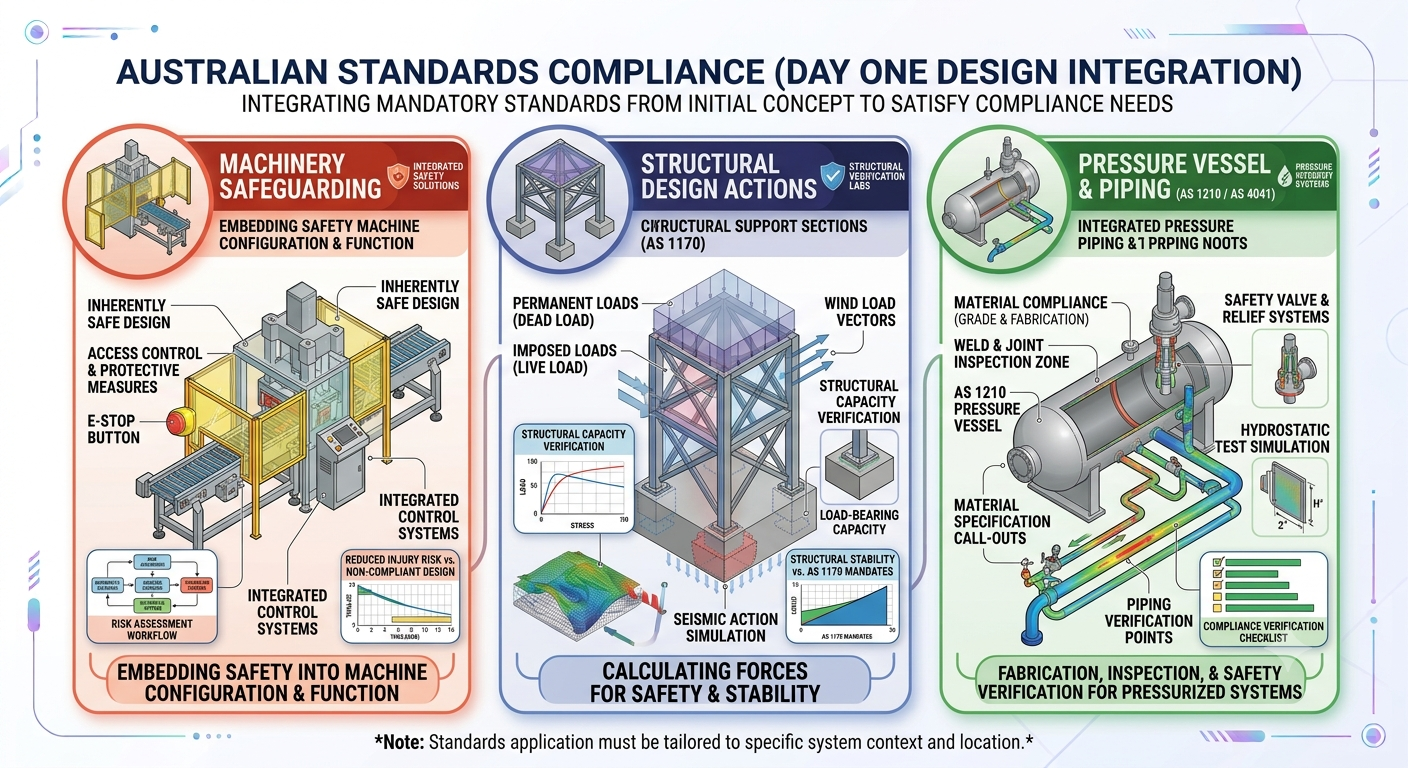
Designing to Australian standards protects workers, ensures structural integrity, and streamlines the regulatory approval process with local authorities.
Skill Set: The Interdisciplinary Capabilities Driving Success
Delivering a functional production line installation requires a broad, interdisciplinary skill set. It demands a mix of traditional engineering principles, advanced software literacy, and practical field experience.
Required Team Skill Set:
- Technical Proficiency: 3D modeling, FEA, and mechanical design.
- Practical Knowledge: Practical understanding of machining, welding, fabrication, and interfaces with building systems.
- Regulatory & Safety: Mastery of Australian Standards, familiarity with industry standards, and risk assessment.
- Project Execution: Managing scope and delivering cost-effective optimization.
A well-rounded engineering team combines the analytical skills needed for complex stress calculations with the practical knowledge required for real-world fabrication. Understanding how metals bend, weld, and wear over time allows designers to create components that are easy to manufacture and maintain, supporting ensuring compliance during fabrication and installation.
Mechanical Engineering: Bringing Motion and Automation to Life
Ultimately, production line installation is rooted in the principles of mechanical engineering. This discipline focuses on safely and efficiently managing motion, force, and energy transfer.
Mechanical design services also support automotive, aerospace, and industrial sectors across a wide range of industries. CAD services also support medical devices and renewable energy, with medical design focused on engineering healthcare equipment and related solutions.
Mechanical Engineering Power Flow:
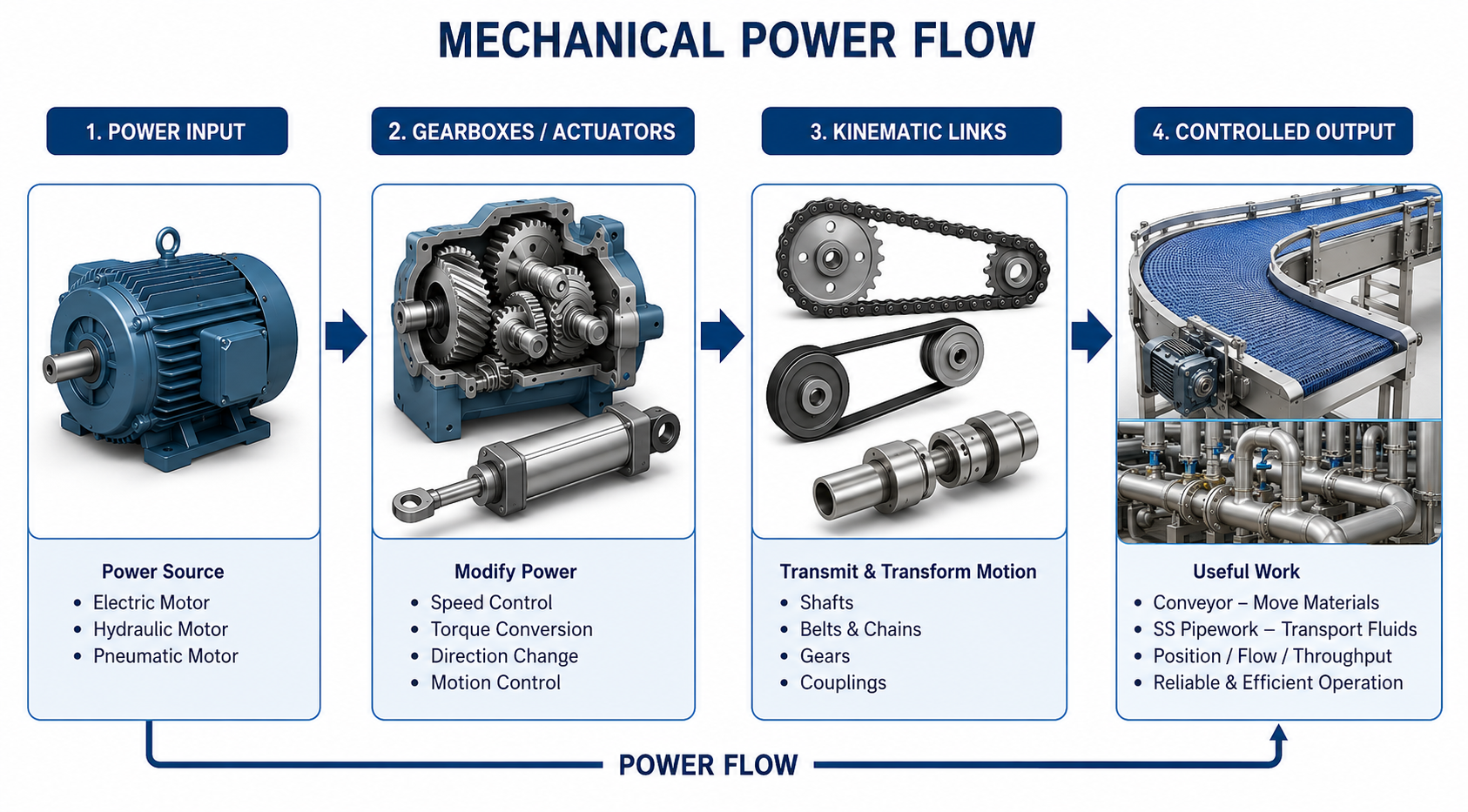
From sizing motors and gearboxes to choosing pneumatic actuators and bearings, mechanical engineering ensures the line runs at the desired cycle times without premature component wear. By combining mechanical design with modern automation, engineers help industrial operations achieve predictable, high quality production outputs.
Maximizing Value and Efficiency Through Expert Partners
Investing in structured engineering design provides substantial benefits for operators, and while cost matters, value should be prioritized when selecting expert CAD services. It shifts the project focus from reactive troubleshooting to proactive optimization.
Project Impact Comparison (With vs. Without Engineering Design):
- Procurement Stage: Without design, guesswork leads to ordering the wrong parts. With design, an exact Bill of Materials (BOM) prevents waste.
- Installation Stage: Without design, crews must perform frequent on-site modifications, cutting, and welding. With design, pre-fabricated components fit together perfectly.
- Commissioning Stage: Without design, long delays occur due to unexpected physical clashes. With design, a fast startup is achieved through simulated workflows.
- Operations Stage: Without design, plants experience frequent maintenance halts and safety hazards. With design, operators receive a reliable, compliant, and optimized output.
Working with specialized teams helps improve business outcomes by lowering material waste, controlling labor costs, and preventing extended downtime, so clients benefit through reduced waste, shorter timelines, and clearer execution. Clear documentation and tailored solutions support a wider range of operational needs across industries, allowing fabricators to build components off-site with confidence, knowing they will fit seamlessly upon delivery.
Long-Term Asset Management and Digital Continuity
The value of comprehensive engineering documentation extends well beyond the initial installation phase. The digital models, detailed drawings, and piping schematics created during design serve as an accurate operational record for the facility.
When the production line requires maintenance, component replacement, or future upgrades, plant operators can reference the existing CAD models rather than manually measuring equipment on the factory floor. This digital continuity simplifies the sourcing of spare parts, speeds up maintenance turnarounds, and provides a reliable foundation for future facility expansions.
Conclusion: Engineering the Future of Production
A successful production line installation relies on precise execution, clear communication, and technical accuracy. By partnering with experienced cad design companies, utilizing professional drafting services, and applying rigorous mechanical engineering principles, manufacturers can confidently navigate complex industrial projects.
Investing in robust engineering design helps safeguard project budgets, ensures compliance with Australian standards, and delivers reliable, high-performing assets that drive long-term industrial productivity.
Ready to Optimize Your Next Project?
Whether you are planning a new assembly line layout, upgrading a piping network, or expanding an existing manufacturing plant, our experienced engineering and design team is here to help. Contact us today to discuss your project requirements and discover how our digital engineering services can help you achieve high-quality results.
Digital Precision: Why Jarlam is the Engineering Core for Australian Manufacturers
In modern industrial sectors like food, beverage, and pharmaceuticals, setting up a high-performance production line requires absolute geometric certainty. Jarlam Australia stands out as a leading provider of CAD design and mechanical engineering services for manufacturers because they anchor their services in high-level CAD design, precise mechanical drafting, and comprehensive mechanical engineering.
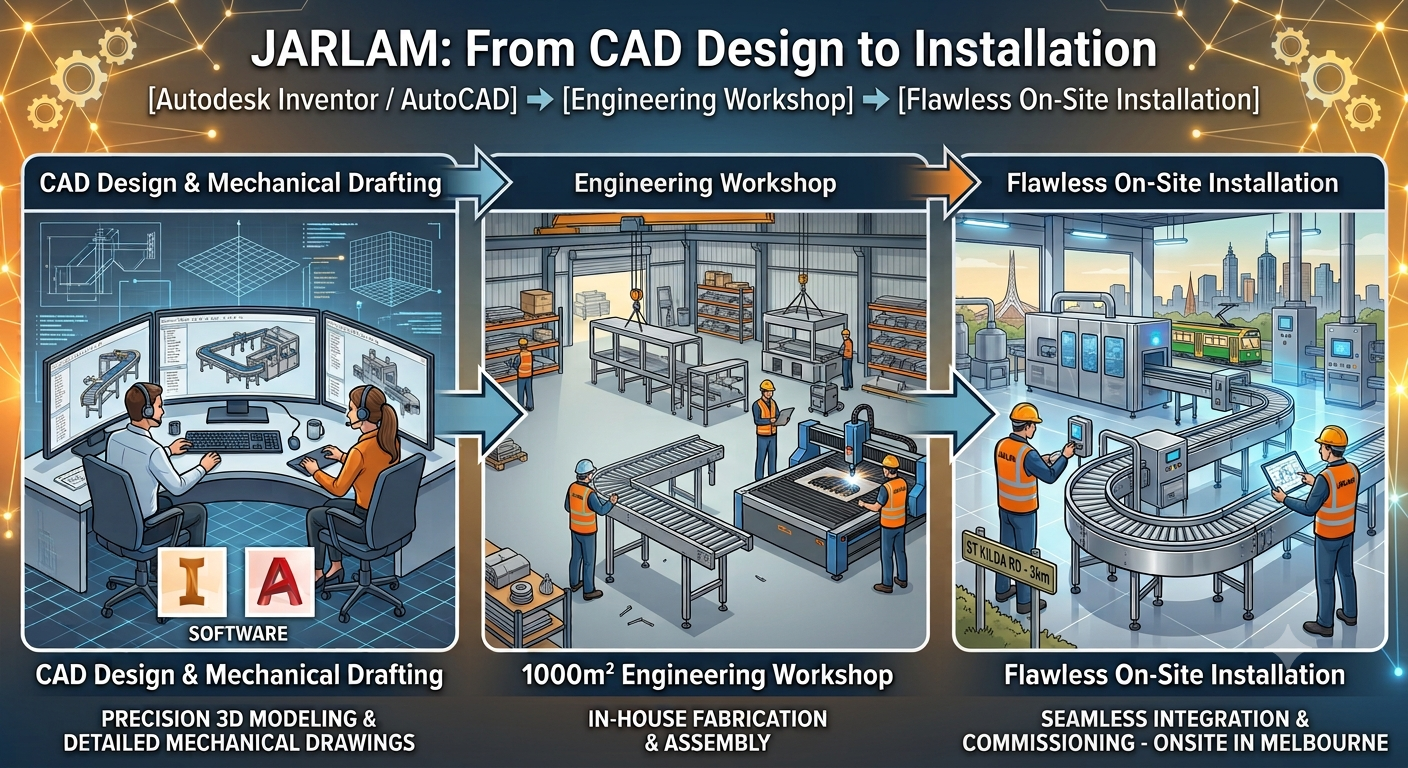
Operating across Melbourne, Sydney, Brisbane, and Perth, Jarlam bridges the gap between raw concept and physical reality with a flexible service model that adapts to different project requirements. Rather than relying on approximate layouts, their team utilizes advanced software platforms like Autodesk Inventor and AutoCAD to support collaboration between design and workshop teams and engineer digital twins of complete production lines. This allows for rigorous 3D modeling, parametric assembly testing, and digital clash detection long before any steel is cut.
The Value Jarlam Adds to the Factory Floor:
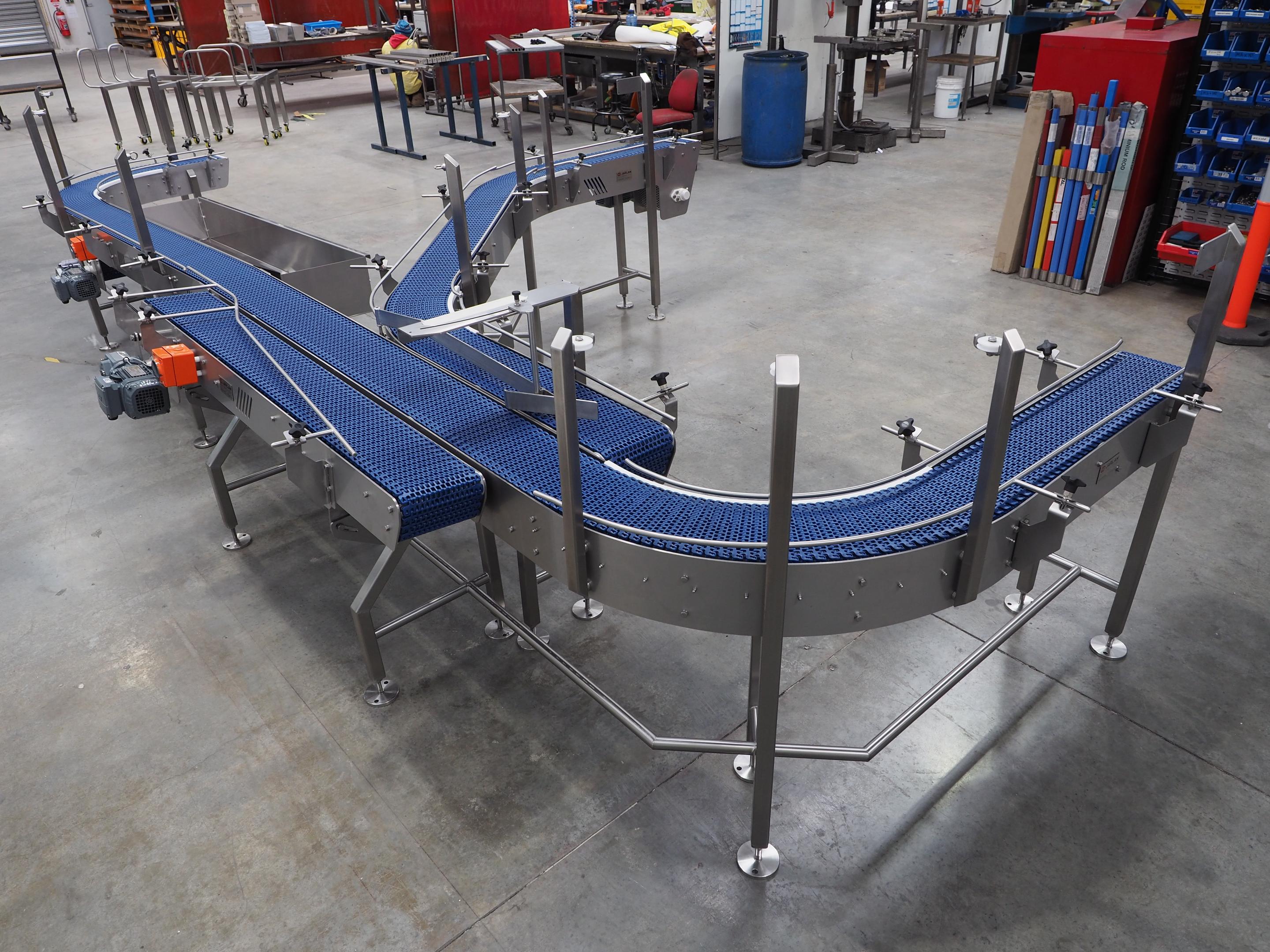
- Direct Mechanical Drafting: Their team creates detailed 2D and 3D drawings that preserve design intent, specifying exact tolerances for custom stainless steel conveyors and components.
- Integrated Workshop Capabilities: Because their designers work under the same roof as their engineering workshop, layouts transition into fabrication with zero loss of data, eliminating outsourcing risks.
- Engineered Compliance: Every mechanical schematic, line modification, and custom dropper is engineered to satisfy strict Australian Standards (such as hygienic and structural benchmarks).
Partnering with Jarlam means avoiding costly on-site modifications and unpredicted clashes. When your plant requires technical precision, smart automation, and reliable engineering execution, Jarlam delivers constructible blueprints and seamless physical results.