In the food manufacturing industry, maintaining product and consumer safety standards is a non-negotiable process. Every component within a production facility plays a critical role in protecting food products from contamination and ensuring compliance with stringent safety standards.
From transporting raw ingredients to moving finished products through packaging and distribution, food-grade conveyor systems form the backbone of modern food production. They not only improve efficiency but also help maintain product integrity throughout the manufacturing process.
However, not all conveyor systems are suitable for food applications. Manufacturers must ensure their equipment is specifically designed to meet strict hygiene requirements, comply with industry regulations, and support effective cleaning and sanitation practices. Selecting the right food handling conveyors is essential to reducing contamination risks, minimising downtime, and maintaining consistent production standards.
What Are Food Grade Conveyors Systems and How Do They Reduce Contamination Risks?
Food safety involves every aspect of the food manufacturing process. From the moment the raw ingredients enter a production facility through to packaging and dispatch, every piece of equipment plays a vital role in protecting product quality, preventing contamination, and maintaining compliance with strict food safety standards.
One of the most critical components within any food processing environment is the food processing operations and the associated food handling conveyors. Responsible for transporting the products safely and efficiently, food handling conveyors must be designed to meet strict hygiene standards, whilst supporting the food sector in its productivity, reliability and its sanitary production environment.
Food handling conveyors play and important role in the food processing industry. With a wide range of conveyor equipment available, the food manufacturing industry can select a material handling system that best suits their production requirements, product characteristics and hygiene standards. Common types of food handling conveyor systems include:
- Modular Belt Conveyors
- Roller Conveyors
- Specialty Conveyors
- Sanitary Conveyors
- Packaged Goods Conveyor
- Baked Goods Conveyors
- Drag Chain Conveyors
- Screw Conveyors
- Hygienic Conveyors
Food grade conveyor systems are designed for diverse applications across the food manufacturing industry. Conveyor systems can be tailored to assist with operator safety, the hygienic cleaning process, strict standards, high speed requirements, long length distances and careful handling of products such as poultry, baked goods, dairy, confectionery, beverage, fresh produce etc.
Working alongside other material handling systems including food processors, bucket elevators, packaging equipment and automated systems etc, specialty conveyors play vital role in maintaining an efficient production flow. Designed for maximum efficiency, careful handling, reduced product residue and hygienic design food grade conveyors are imperative to the food processing industry.
Where Are Food Conveyors Systems Used In The Manufacturing Industry
Food grade conveyors systems are utilized across all food processing operations in the manufactuing industry.
Some examples of the various industries are:
- Dairy processing plants
- Meat & poultry production
- Bakery food operations
- Beverage manufacturing industries
- Confectionery production
- Fresh food produce processing
- Seafood processing
- Ready to eat meal manufacturing industry
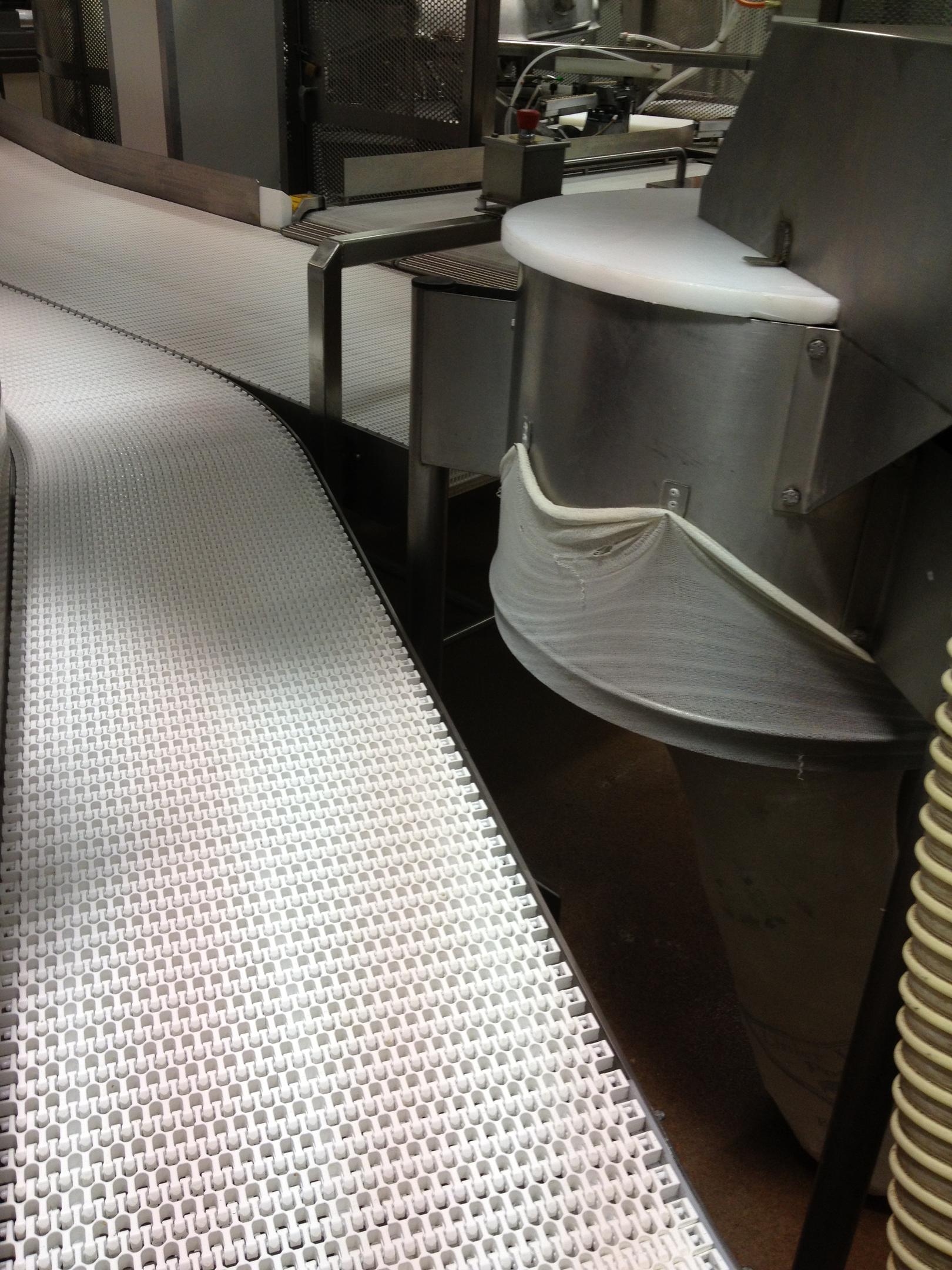
Food processing operations often include conveyor solutions that include food grade belts, stainless steel frames, open framed construction, sealed bearings, guide rails, and hygienic components designed to withstand frequent washdown and sanitation procedures.
The primary goal of a food conveyor system is simply to……
“Transport product safely and efficiently while protecting food quality and ensuring consumer safety”
Who sets the Standards and Regulations?
When integrating food conveyor systems into a manufacturing facility, food safety standards, hygiene requirements and industry regulations must be carefully considered. These are not optional considerations, they are fundamental, non-negotiable requirements within the food manufacturing industry.
Overlooking even the smallest detail during the design, manufacture, or installation process can result in costly modifications, operational downtime, increased contaminations risks or non-compliance during regulatory audits.
There are three major regulations that govern this space:
- FSANZ (Food Sandards Australia New Zealand) all equipment used in food processing must be designed and constructed to ensure it can be easily and effectively cleaned and sanitised. The materials must not contaminate food or harbor pests.
- AS 4674-2004 (Design, Construction and Fit-Out of Food Premises): This Australian Standard provides the benchmark uniform criteria for equipment design. It mandates non-toxic, non-absorbent materials and explicitly targets the elimination of gaps, crevices, and unsealed joints where organic matter can collect.
- AS/NZS 4024.3610:2015 (Conveyor Safety Requirements): Unlike US standards, Australian compliance strictly ties hygienic design with mandatory mechanical safety. This standard governs the physical safeguarding, emergency pull-wires, and interlocked guarding required on conveyors to protect operators while allowing safe access for washdowns.
- HACCP (Hazard Analysis and Critical Control Points) HACCP is recognised worldwide as the foundation of food safety management.
Hygienic Conveyor Systems & Hygienic Design
When it comes to hygienic conveyor systems, food safety starts with the design. Every component should be engineered with hygiene in mind, minimising the potential for bacterial harborage while withstanding the harsh washdown and chemical cleaning environments commonly found in Australian food manufacturing facilities.
Achieving a hygienic conveyor design requires careful consideration of the materials, construction methods and design features used throughout the system.
Material Selection: Selecting the correct materials is fundamental to both hygiene and long-term performance.
Frame Construction:Grade 304 and 316L stainless steel are the industry standard for food-grade conveyor frames. To comply with AS 4674, stainless steel surfaces should have a smooth finish, typically a 2B finish or better to minimise microscopic imperfections where bacteria, moisture and food residue can accumulate.
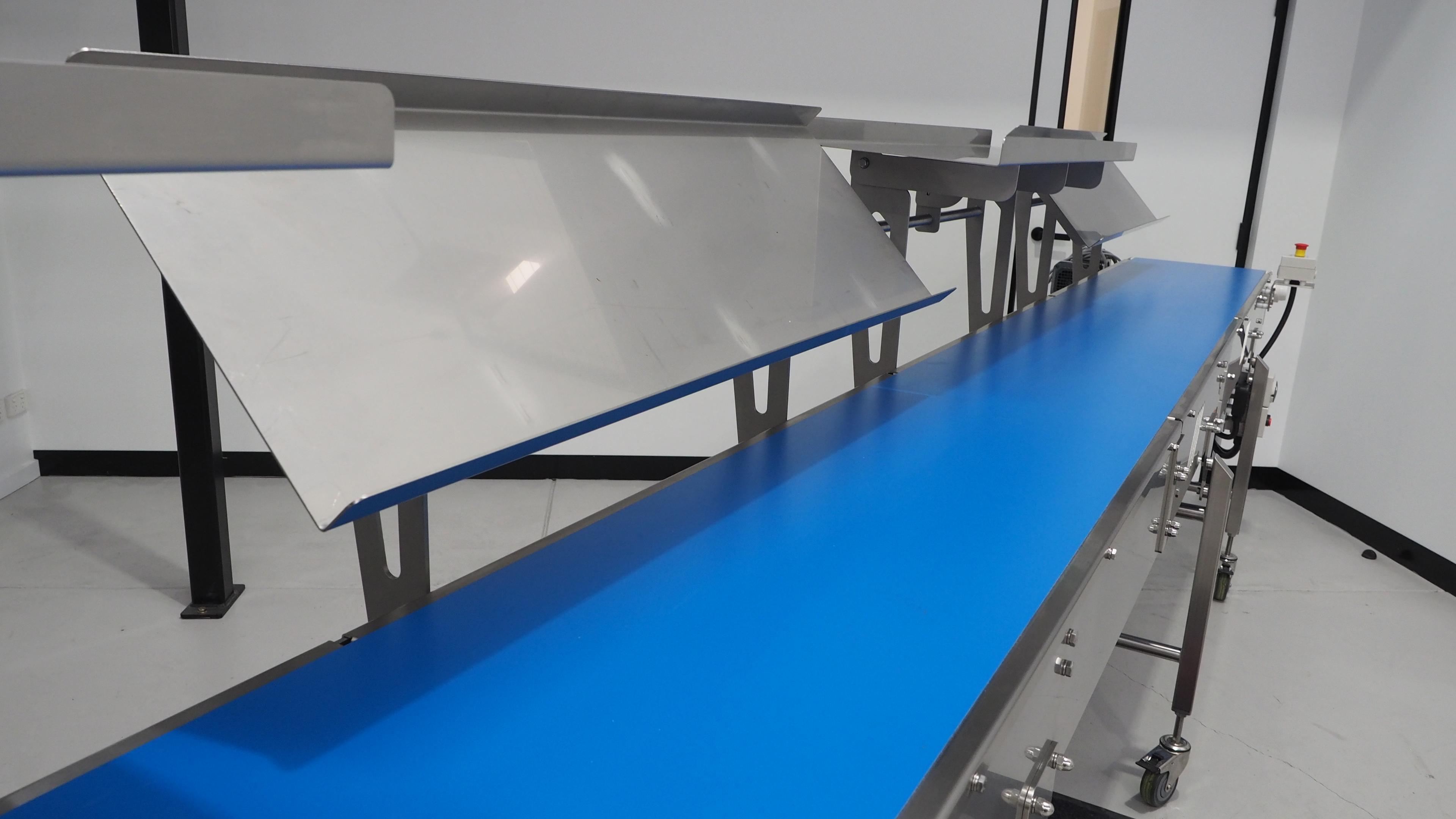
Conveyor Belting:In high risk food processing environments, traditional modular plastic belts are increasingly being replaced with homogeneous (monolithic) thermoplastic polyurethane (TPU) belts. Manufactured as a single continuous belt, these belts eliminate pins, hinges and joints that can harbour pathogens such as Listeria. Their distinctive blue colour also improves visual detection of food residue during inspection and cleaning.
Leading conveyor manufacturers adopt hygienic design principles that promote food safety while simplifying maintenance and cleaning. Effective conveyor systems are engineered to:
- Prevent bacterial build-up
- Eliminate dead zones where product or moisture can accumulate
- Allow complete drainage following washdown
- Support fast and effective cleaning procedures
- Minimise the need for dismantling during sanitation
Compliance with food safety standards begins with intelligent engineering. The most hygienic conveyor systems are designed to eliminate areas where bacteria can accumulate unnoticed, reducing contamination risks and improving cleanability.
Particular attention should be given to avoiding:
- Crevices and gaps
- Hollow sections that cannot be cleaned
- Sharp internal corners
- Exposed threaded fasteners
- Overlapping joints and overlapping surfaces
Instead, hygienic conveyor systems incorporate continuous welds, radiused corners, smooth transitions and open-frame designs that allow unrestricted access for inspection, cleaning and drainage.
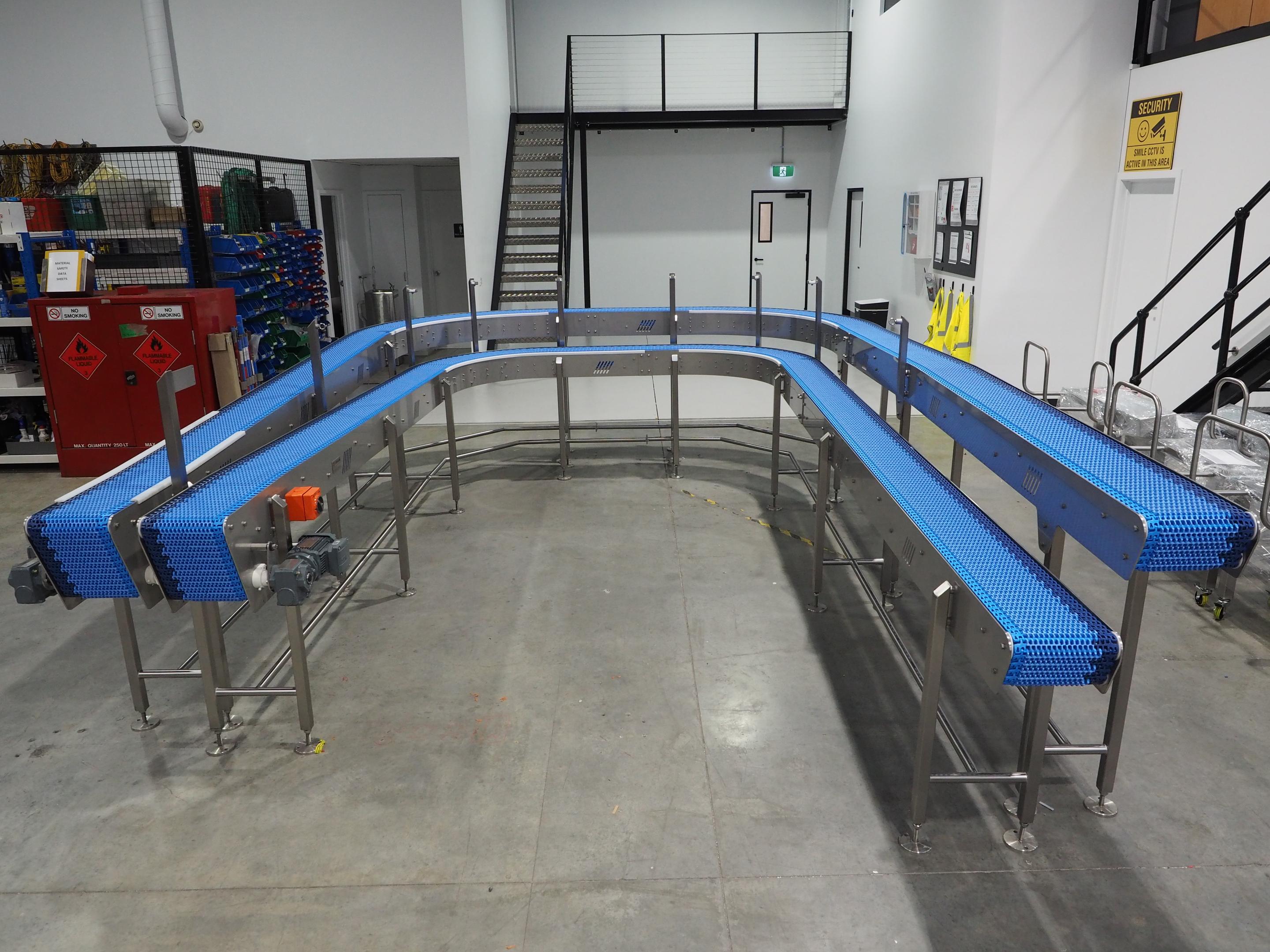
Structural Design Rules For Food Safety
To survive high pressure Clean-In-Place (CIP) or Clean-Out-of-Place (COP) cycles using caustic chemicals, the conveyor must follow precise geometric principles:
- No Flat Surfaces(Shed Profiles): Horizontal surfaces allow water and food particles to pool. Frames must feature sloped profiles (at angles greater than 45 degrees) so that water drains naturally during washdowns.
- Fully Welded Construction: Pre-drilled holes, exposed threads, and lap joints are major food safety liabilities. Elite Australian manufacturers utilize continuous TIG welding and mount external components on machined standoffs (spacer blocks) to allow 360-degree cleaning access.
- Tool less Disassembly & Safety Interlocks: If a sanitation team needs a toolbox to pull a belt off, cleaning routines suffer. Modern designs use quick-release tip-up tails so a single operator can lift the belt in seconds. Under AS/NZS 4024, these tension-release zones must be designed to eliminate finger-pinch points or be paired with safety interlocks.
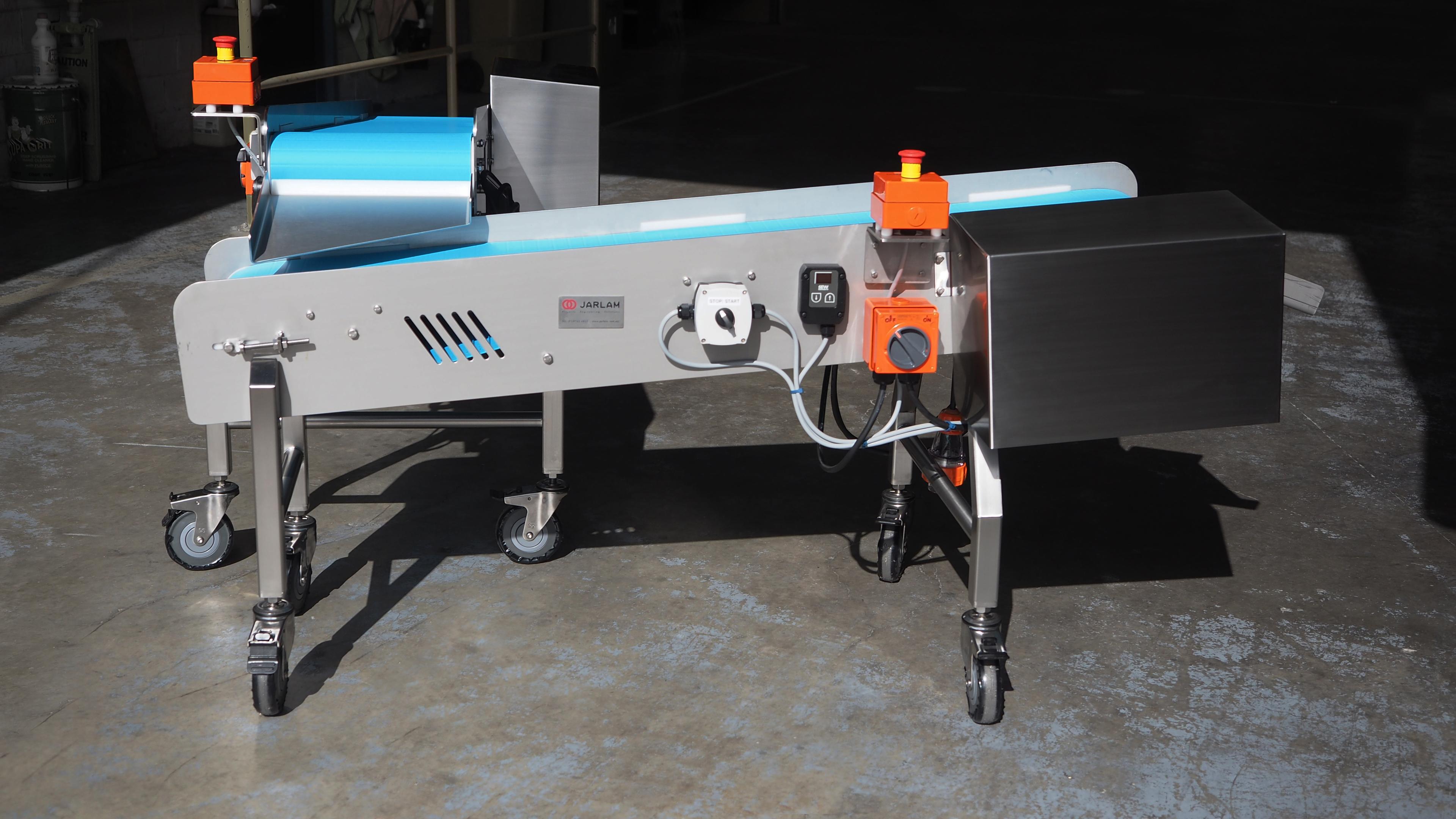
Food Grade Conveyor Belts
Food grade conveyor belts are one of the most critical components of any food processing conveyor system. Because they come into direct contact with food products, they must be manufactured from materials that are safe, durable, and compliant with food safety regulations. Choosing the right food grade conveyor belt helps maintain product quality, improve production efficiency, and reduce the risk of contamination.
When selecting food grade conveyors, manufacturers should consider the following:
- Food product being handled – Different foods require different belt materials and surface finishes eg. poultry
- Operating temperature – Belts must perform reliably in hot, cold, or frozen environments.
- Cleaning requirements – Materials should withstand regular washdowns and food-safe cleaning chemicals to ensure the production environment is clean at all times and to avoid the build up of product residue.
- Moisture levels – Wet processing environments require belts that resist water absorption and bacterial growth.
- Production environment – The belt should suit the overall processing conditions and production demands.
Common Food Grade Conveyor Belt Materials
Different food processing conveyors require different belt materials depending on the application and the various stages of production:
- Polyurethane (PU) belts – Ideal for meat, poultry, seafood, and dairy processing due to their excellent resistance to oils, fats, and cleaning chemicals.
- Food-grade PVC belts – Commonly used for dry food applications such as bakeries, confectionery, and packaging lines.
- Modular plastic belts – Well suited to operations requiring frequent washdowns, good drainage, and easy maintenance.
- Stainless steel belts – Best for high-temperature processing and environments where maximum hygiene and durability are essential.
Benefits of Choosing the Right Food Grade Conveyor Belt
Using the correct food grade conveyor belt provides several advantages, including:
- Improved food safety and hygiene.
- Reduced risk of product contamination.
- Better product handling and reduced product damage.
- Increased production efficiency.
- Longer conveyor system lifespan.
- Reduced maintenance costs and downtime.
- Compliance with food industry regulations and hygiene standards.
Regular Inspection and Maintenance
To keep hygienic conveyor systems operating safely and efficiently, food-grade conveyor belts should be inspected and maintained regularly. This includes:
- Cleaning belts after production runs.
- Inspecting for wear, cracks, or damage.
- Replacing worn or damaged belts promptly.
- Checking belt tension and alignment.
- Monitoring for signs of contamination or product build-up.
By investing in high-quality food grade conveyor belts and following a regular maintenance schedule, food manufacturers can improve productivity, maintain compliance with food safety standards, and protect both their products and consumers.
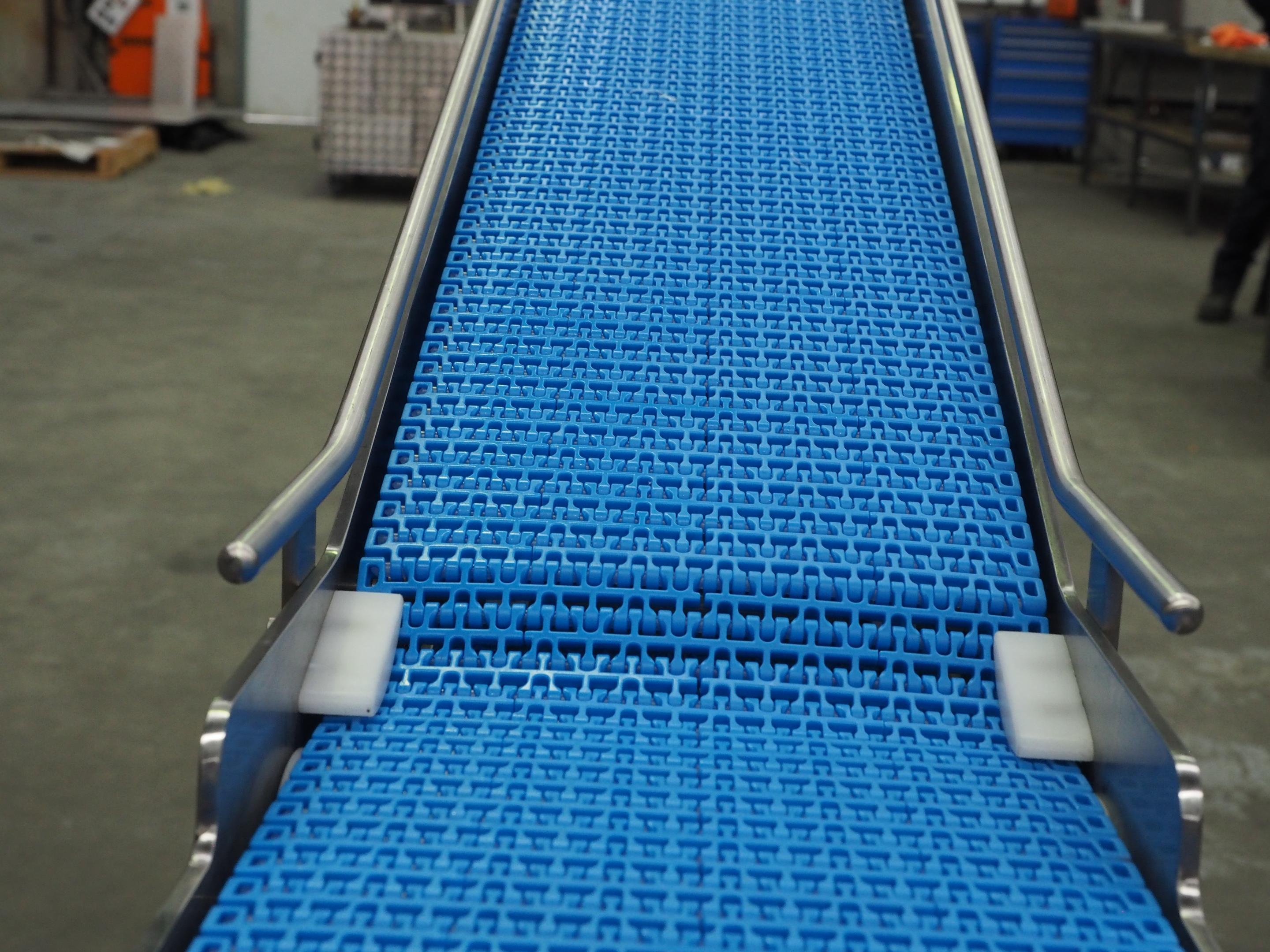
Food Grade Bucket Elevators
Food-grade bucket elevators play an important role in transporting bulk food products safely and efficiently while maintaining hygiene and product quality. Key benefits include:
- Safely elevating bulk food products between production stages.
- Suitable for industries including grain, flour, dairy, confectionery, snack foods, and pet food.
- Stainless steel construction with hygienic, easy-to-clean surfaces.
- Enclosed design to reduce contamination and support food safety.
- Food-grade buckets that provide gentle product handling and minimise damage.
- Easy access for cleaning and routine maintenance through removable inspection panels.
- Reliable performance that supports food safety compliance and improves production efficiency.
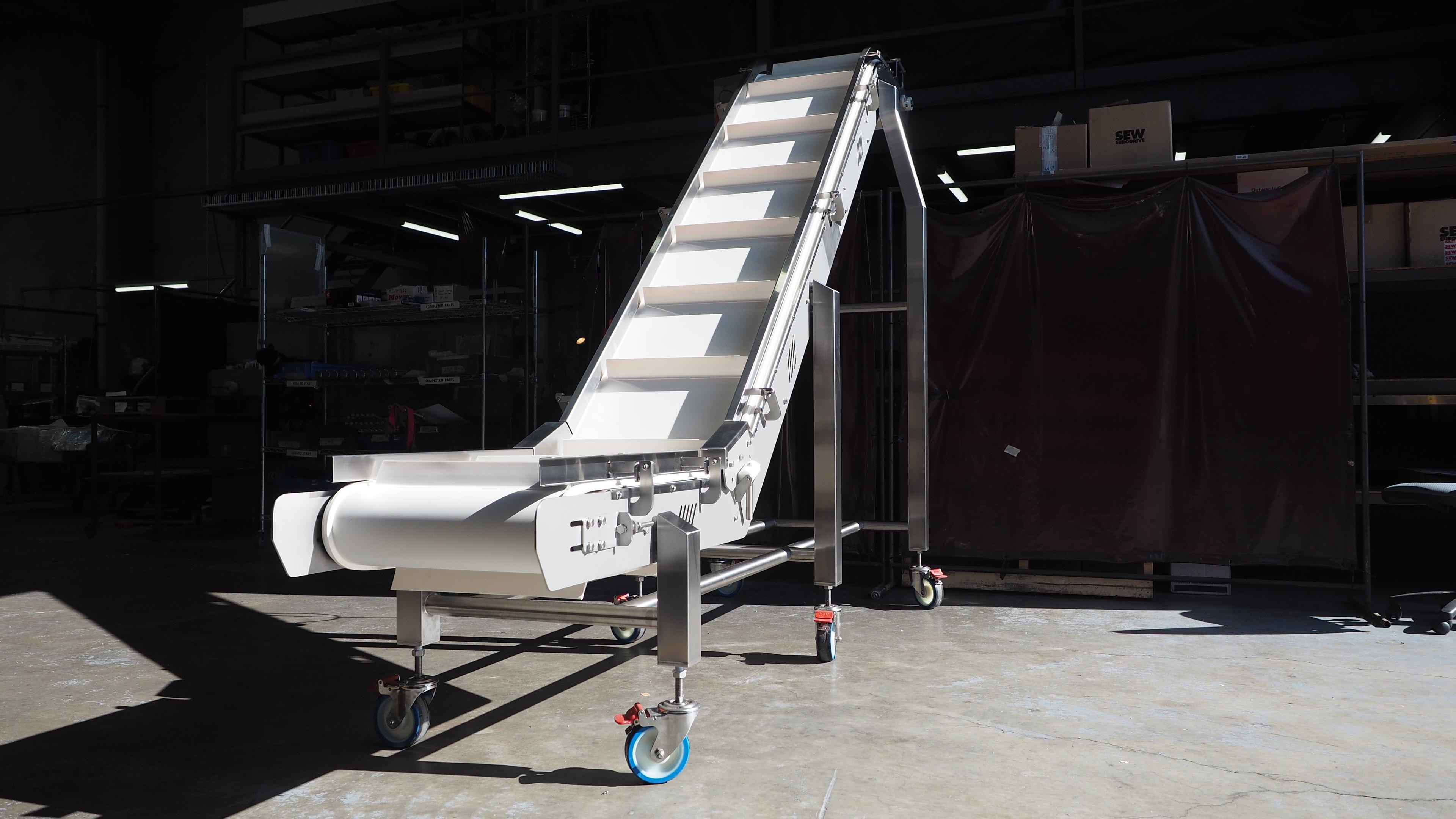
Case Example 1 – Bakery ProductionCase Example 1 – Bakery Production
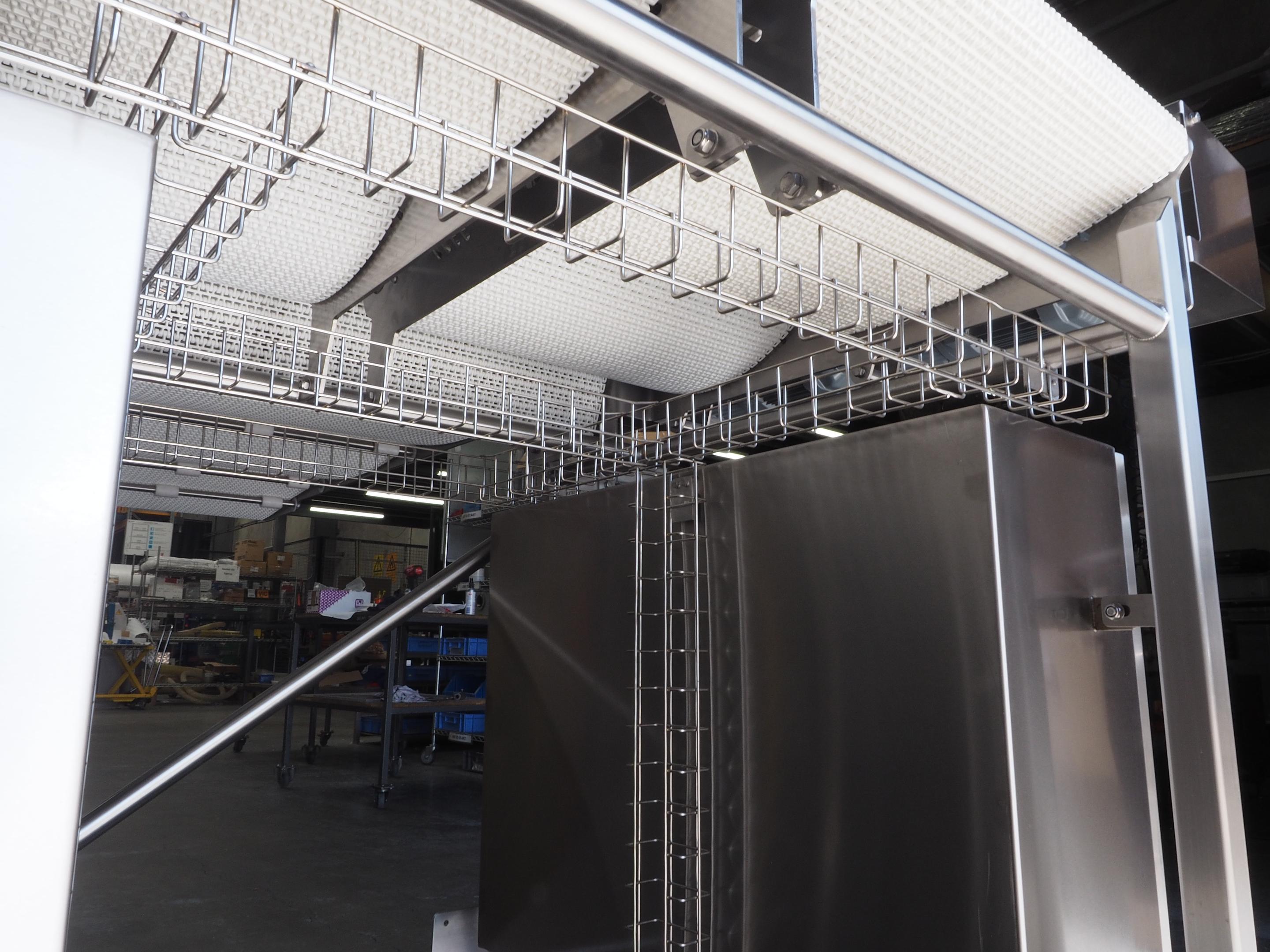
A commercial bakery experienced repeated flour build-up underneath enclosed conveyor frames.
Although products remained safe, cleaning crews required several hours each evening to remove accumulated residue.
The business upgraded to open-frame food processing conveyors featuring quick-release belts.
The results included:
- Faster daily cleaning
- Improved inspection visibility
- Reduced sanitation labour
- Less production downtime
- Improved hygiene audit performance
The investment quickly paid for itself through labour savings and increased production availability.
Case Example 2 – Meat Processing Facility
A meat processor operating in a high-moisture environment struggled with corrosion and bacterial growth on older painted steel conveyors.
The company replaced its equipment with stainless steel hygienic conveyor systems featuring sloped frames and improved drainage.
Benefits included:
- Reduced corrosion
- Improved washdown efficiency
- Better bacterial control
- Lower maintenance costs
- Greater equipment lifespan
The upgraded conveyors also supported stricter HACCP procedures and improved confidence during regulatory inspections.
The Future of Food Grade Conveyor Systems
The future of food grade conveyor systems is being shaped by advances in automation, smarter technology, and stricter food safety regulations. As food manufacturers look to improve efficiency while maintaining the highest hygiene standards, food processing conveyors are becoming more reliable, easier to maintain, and increasingly connected.
Emerging Trends in Food Grade Conveyor Systems
Modern hygienic conveyor systems are incorporating new technologies that help improve performance and food safety, including:
- Smart sensors – Monitor conveyor performance in real time and detect potential issues before they lead to costly breakdowns.
- Predictive maintenance – Uses equipment data to schedule maintenance before failures occur, reducing downtime.
- Automated cleaning systems – Minimise manual cleaning while helping maintain strict hygiene standards.
- Improved hygienic materials – Better resistance to corrosion, bacteria, moisture, and harsh cleaning chemicals.
- Energy-efficient drive technology – Reduces energy consumption and operating costs while maintaining production performance.
- Digital monitoring and automation – Integrates conveyor systems with production software for improved control and efficiency.
- Enhanced product traceability – Tracks products throughout the production process to support food safety and regulatory compliance.
Benefits for Food Manufacturers
Investing in modern food grade conveyors offers several long-term advantages:
- Improved food safety and hygiene compliance.
- Increased production efficiency.
- Reduced maintenance costs and unplanned downtime.
- Better product quality and consistency.
- Improved traceability for faster product recalls if required.
- Lower energy consumption and operating costs.
- Greater integration with automated production lines.
Looking Ahead
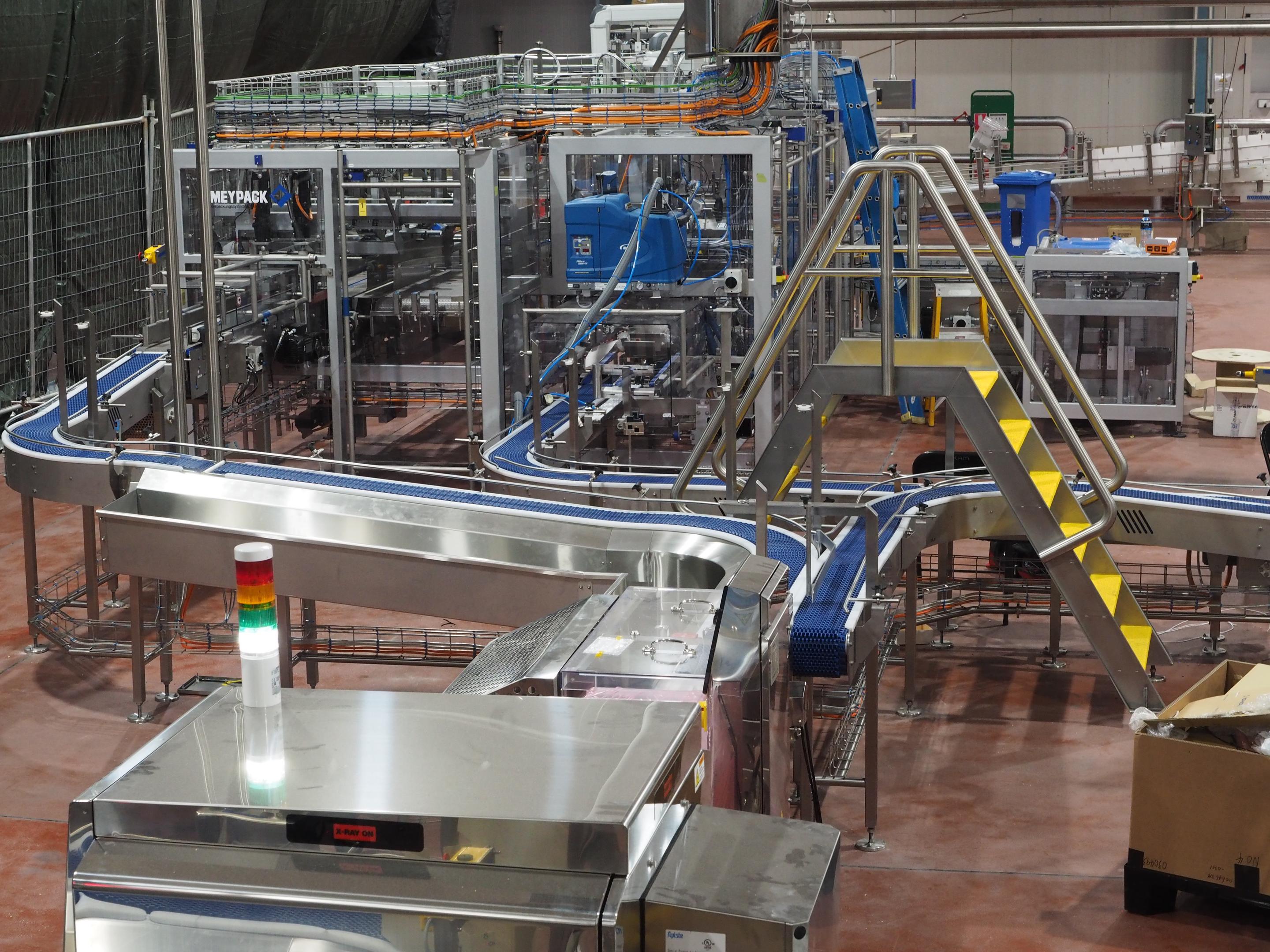
As automation and digital technologies continue to evolve, food grade conveyor systems will become an even more important part of food manufacturing. Businesses that invest in modern food processing conveyors today will be better positioned to meet future food safety regulations, improve operational efficiency, and remain competitive in an industry where hygiene, reliability, and productivity are critical to long-term success.
Conclusion
Food safety begins with hygienic design, and conveyor systems are central to maintaining safe, efficient food production. Well-designed food grade conveyors help manufacturers comply with stringent regulations, reduce contamination risks, simplify cleaning, and improve overall production efficiency.
By selecting purpose-built food processing conveyors that prioritise sanitary engineering, food businesses can strengthen their HACCP programs, meet hygiene standards, reduce maintenance costs, and protect both consumers and their reputation.
As regulations continue to tighten and customer expectations rise, investing in reliable hygienicconveyor systems is no longer simply a compliance requirement—it is a strategic decision that supports long-term operational success. Whether upgrading an existing production line or designing a new facility, choosing Stainless steel conveyors built with hygiene, durability and compliance in mind provides lasting value across every stage of food manufacturing.
Keep your production moving with confidence.
When it comes to food-grade conveyor systems in your food processing environment, experience matters. Partner with Jarlam for conveyor solutions that deliver on hygiene, performance, and reliability. Speak with our team today and let’s create a conveyor system built for your business.